West Virginia
Google helps West Virginia businesses move toward their goals
-
$459M of economic activity
In 2025, Google helped provide $459 million of economic activity for thousands of West Virginia businesses, nonprofits, publishers, creators, and developers
-
95,000 West Virginia businesses
More than 95,000 West Virginia businesses used Google’s tools at no cost to receive phone calls, bookings, reviews, requests for directions, or other direct connections to their customers
-
$700,000+ of Ad Grants to nonprofits
In 2025 alone, Google.org provided more than $700,000 worth of donated search ads to West Virginia nonprofits through the Google Ad Grants program


$459M of economic activity
In 2025, Google helped provide $459 million of economic activity for thousands of West Virginia businesses, nonprofits, publishers, creators, and developers
95,000 West Viriginia businesses
More than 95,000 West Virginia businesses used Google’s tools at no cost to receive phone calls, bookings, reviews, requests for directions, or other direct connections to their customers
$700,000+ of Ad Grants to nonprofits
In 2025 alone, Google.org provided more than $700,000 worth of donated search ads to West Virginia nonprofits through the Google Ad Grants program
Featured businesses
Hernshaw Farms
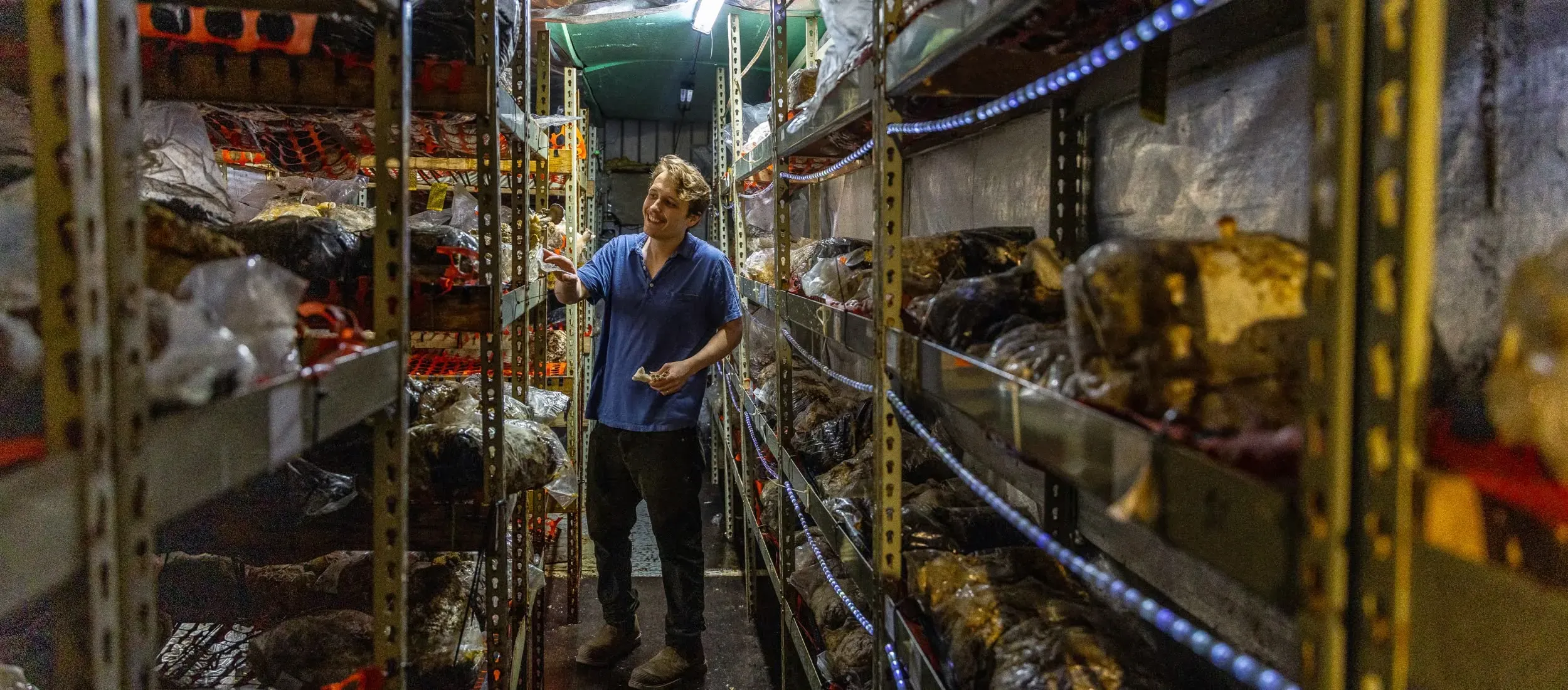
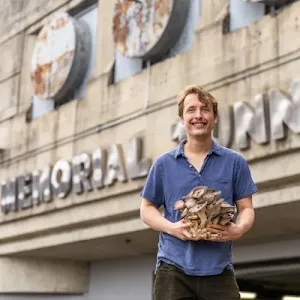
Doing his part for the “great Appalachian revival,” George Patterson founded Hernshaw Farms in 2018 at a former strip mine. George lived onsite in a trailer, learning about mushroom growing on YouTube and soon selling wholesale to restaurants. During the COVID-19 pandemic, George built a website to sell directly to consumers. That e-commerce business, well, mushroomed more than he could have imagined. In 2022, he moved growing operations to the historic Memorial Tunnel (once part of the West Virginia turnpike). Beyond mushroom sales, his nutrient-rich mushroom compost, “the Cadillac of soil building,” is now used to transform old coal mining sites into farmland.
“Google Ads helped turn us from a farm serving the local community to a farm serving the nation.”
Google Ads help George reach B2B and B2C customers searching for gourmet mushrooms and growing kits, with business increasing tenfold since inception. “Google Ads helped turn us from a farm serving the local community to a farm serving the nation,” he says, noting Performance Max campaigns “take the stress and complexity out of ad management.” An estimated 70 percent of customers find Hernshaw Farms via Google Ads. “We’ve also integrated AI into our daily production,” notes George, who uses a Gemini-powered app platform to design his own tools to categorize and predict harvests. “I’m just a mushroom farmer out there in the woods making harvest prediction software with AI, and saving tens of thousands of dollars. The masterful increase of efficiency is crazy.” The farm operates at maximum capacity, producing 3,000 pounds of mushrooms weekly. George streamlines operations with Google Workspace, using Forms and Sheets to track production, and a shared Drive where employees can quickly access and print product labels. George also shares what he’s learned about using technology to promote eco-conscious farming and rural renewal with others. “I think we're really on the right track now. West Virginia is happening.”
Products
Custard Stand Food Products
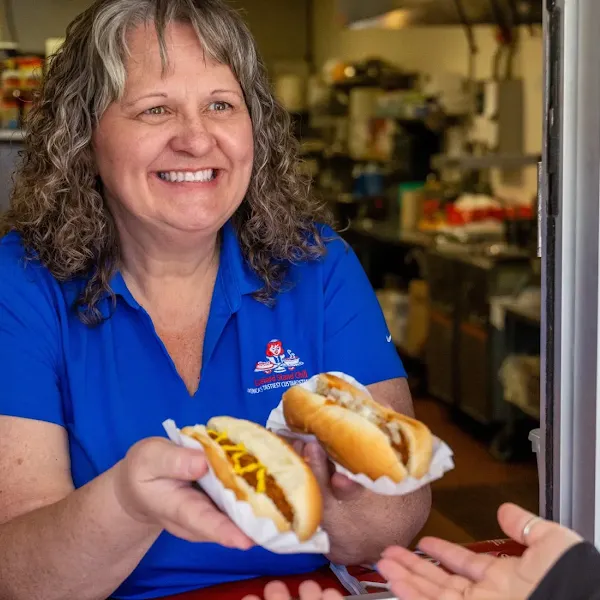
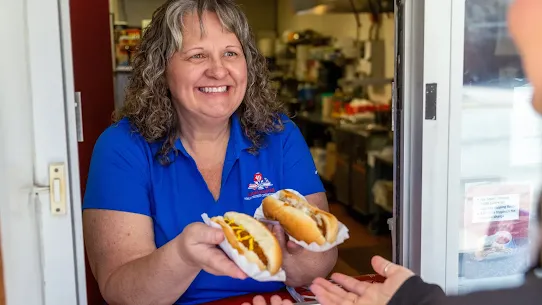
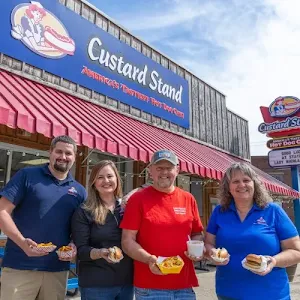
Webster Springs may have “the one traffic light in the whole county,” but that didn’t stop Angie Cowger and her family from dreaming big and turning a treasured recipe into Custard Stand Food Products. It opened as an ice cream stand in 1991, also selling hot dogs topped with the family’s chili. Before long, customers were asking to buy the chili on its own. “My husband and I had been looking for a way to expand our business and he said, ‘Angie, if you can figure out how to market it, I can make it.’ And that's what we did.” In 2003, they turned a car wash into a kitchen and factory and took their hot dog chili to the retail market. “We started out with a map of West Virginia on the wall,” Angie says. “We would take chili in the ice box, a hot plate and a kettle, and go to independent retailers. We'd sample the store owner, the manager, whoever was around.” Now, their products are available in 20 states and 3,000 grocery stores.
“I have a tendency to be very wordy, but when I use Google Workspace with Gemini, I can write an email and then get help to shorten it. And it’s easy!”
Alissa Clayton, Angie’s daughter and Custard Stand’s social media and marketing manager, says that while they were always efficient, Google tools boosted their reach and capabilities and account for more than 20 percent of their business growth. Angie uses Google Workspace–Calendar is her favorite–to keep the team organized and up to date. “I can create an event for a demo, add everyone from the person packing the supplies to the ad person, and put all kinds of notes in there,” Angie says. She uses Gemini for email support: “I have a tendency to be very wordy,” she admits, “but when I use Google Workspace with Gemini, I can write an email and then get help to shorten it. And it’s easy!” In 2024, the company saw over 30 percent revenue growth and has an expansion in the works. “It amazes me how my parents figured it all out and reached this level,” Alissa says. “My mom doesn’t take no for an answer–that’s the driving force behind this business.”
Products
Elk City Auto Spa
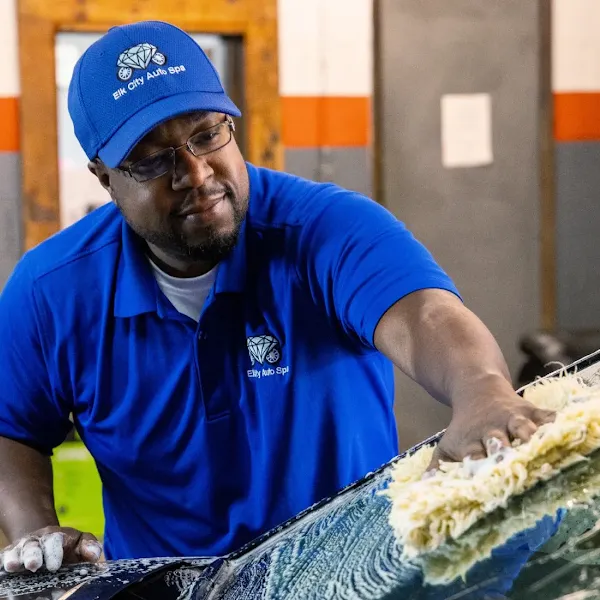
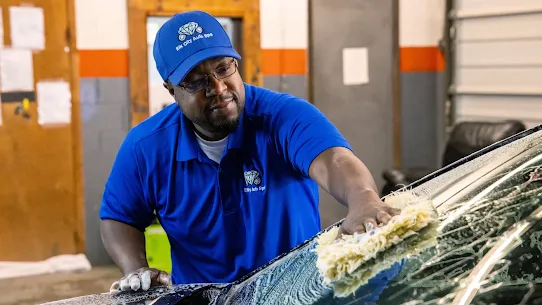
C. Anthony Parker knows cars. He started his first dealership at age 19, selling cars for nearly two decades and expanding into body and mechanical work before deciding to focus on the detailing side of the industry. In 2019, C. Anthony founded Elk City Auto Spa to keep the cars in his hometown of Charleston looking sharp. “We spend around nine hours transforming a filthy vehicle into a showroom-quality vehicle inside and out,” he says with pride. ”And our clients love what we do.” Elk City Auto Spa and their 7 employees serve over 1,500 customers yearly across the Mountain State, cleaning everything from minivans to fleet vehicles with top-notch attention to detail, using compounds C. Anthony designed himself. Since the beginning, he’s trusted Google tools to help his business deliver customer experiences that sparkle.
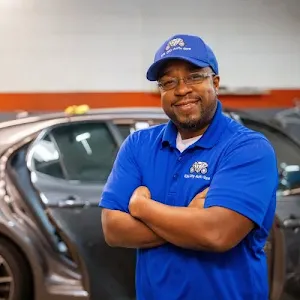
“When prospective clients see over 300 five-star customer reviews on our Google Business Profile, it gives them the peace of mind to book an appointment with us.”
More than 80 percent of customers find Elk City Auto Spa through their Google Business Profile, where they showcase their skills, photos of their work, and–most importantly–their happy customers. When potential customers see over 300 five-star reviews, they “know that they’ve found the best,” C. Anthony explains. Revenue is up more than 300 percent since the shop began using their Business Profile. “These leads are hot and ready. They’ve seen our work, they’ve seen the reviews, and they know they can trust us,” he says. Elk City Auto Spa also uses Google Workspace tools like Slides and Sheets to deliver business presentations and customer invoices that are as polished and professional as their work. As they look to the future, they plan to add a traveling detailing service and hire more technicians, and they’re looking into AI-powered chatbots to process customer inquiries even faster. “Charleston is a small city with a big heart,” C. Anthony says. “Being a cornerstone business that people here can count on means everything.”
Products
Appalachian Botanical Co.
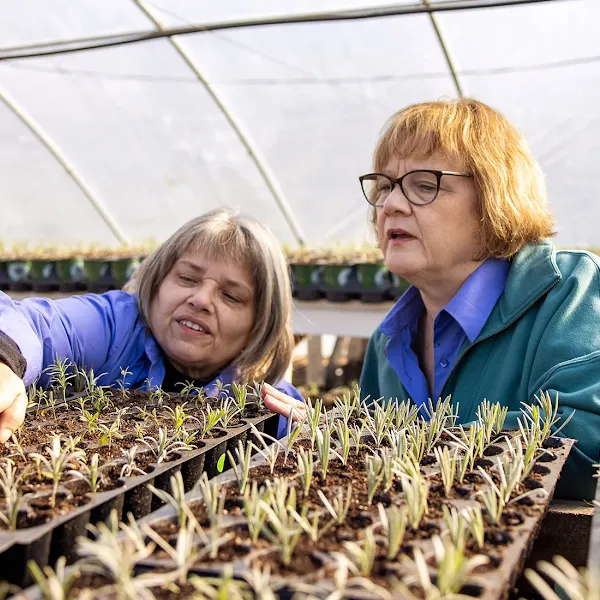
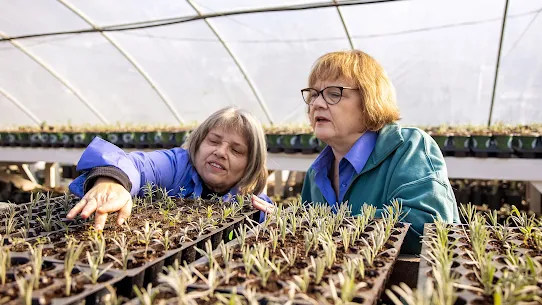
West Virginians are used to being self-sufficient, and when they have a good idea, they’ll make it blossom. When a federally funded grant project growing lavender–a hearty plant that loves rocky soil–on reclaimed coal mine land ended, team member Jocelyn Sheppard knew she had found a good idea for a business–and for her southern West Virginia community. “We’re employing former coal miners, veterans, people who didn’t finish high school, and people who just need a second chance. They enjoy growing lavender, and don’t have to move away to make a living,” Jocelyn says. Appalachian Botanical Co. stands as a bold alternative to the 98 percent of lavender that is imported into the U.S., selling premium aromatherapy, body care items, and culinary products made from Boone County’s own lavender fields. And as Appalachian Botanical Co. makes plans to grow demand for West Virginia’s finest across the country and around the world, they’re using Google tools to help make it happen.
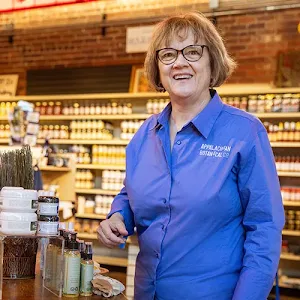
“We’re using Google Ads to find geographic clusters of our ideal customers nationwide so we can grow efficiently.”
With a good sense of who their local buyers are, Appalachian Botanical Co. focuses their Google Ads to find more customers nationwide and around the world. They use Google Ads to identify dense population clusters that make for super efficient ad campaigns. “We’re finding them in Southern California, Texas, Colorado, and more; Google Ads is just so valuable because it gets us the most bang for our buck,” Jocelyn says. And when COVID-19 compounded the communication challenges in the remote and mountainous state, Google Workspace tools like Google Meet and Docs kept Jocelyn’s team connected, productive, and on the same page. Appalachian Botanical Co. is growing just as fast as their lavender fields–continuing to give second chances to West Virginia’s people and land, and to export a little piece of the Mountain State to the rest of the world. “I'm just so proud of everything that we've accomplished,” Jocelyn says. “And I'm excited about the opportunities to come.”
Products
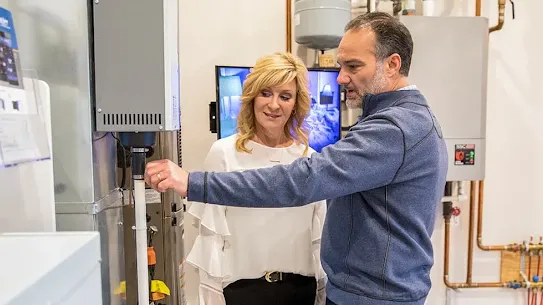
Grogg’s Home Services
In 1996, Tim Hanlon and his wife, Carma, took a leap of faith in purchasing Grogg’s Home Services, a heating-and-air-conditioning business founded by her father, Leon Grogg. Operating first out of their home, Tim learned the trade while working a second job, and Carma juggled phone calls and scheduling with raising their children. They dispatched service calls from their kitchen, and on one occasion, the neighbor’s dog stole a pair of their employee’s work boots off the porch. “He had to get to the job, so I gave him $50 to buy a pair of boots on his way to the customer’s house,” Tim recalls. Their hard work and philosophy of exceeding expectations have made Grogg’s Home Services a success.
“We embraced technology and the web, and amazing growth soon followed.”
The company has been online since 2006. While Tim admits he resisted technology at first, “eventually, I became the driving force behind totally getting out of the yellow pages,” he shares. Today AdWords, Google’s advertising program, accounts for 80 percent of their online sales, according to Director of Finance and IT Adam McDowell. They use insights from Google Analytics to optimize their ad campaigns, improve web traffic, and keep customers engaged. The Internet has allowed the company to expand their service area from West Virginia into Ohio, and informs customers about new service offerings. “Online advertising has helped us reach further than what typical print media will allow us to reach,” says Adam. “And having that online presence to say we now provide these other services has been huge.”
Grogg’s Home Services has long since outgrown the Hanlons' kitchen, adding a Clarksburg branch to their location in Parkersburg. They service nearly 10,000 customers a year, and have expanded into electrical, plumbing, and other services. Despite their growth, Adam says, “Grogg’s is still very much a family environment.” They offer extensive training—75 to 100 hours a year—to their employees. “We invest in them because we want them to stay here, and to have the tools they need to be successful,” he explains. They also give back to the community by donating to charities and supporting local families in need. “We always try to do the right thing, even if it costs us money to do so,” Tim says, which has earned Grogg’s a reputation for providing reliable, quality service, and for doing right by customers and employees alike.