-
$448M of economic activity
In 2025, Google helped provide $448 million of economic activity for thousands of Mississippi businesses, nonprofits, publishers, creators, and developers
-
159,000Mississippi businesses
More than 159,000 Mississippi businesses used Google’s tools at no cost to receive phone calls, bookings, reviews, requests for directions, or other direct connections to their customers
-
$1M+ of Ad Grants to nonprofits
In 2025 alone, Google.org provided more than $1 million worth of donated search ads to Mississippi nonprofits through the Google Ad Grants program
-
$1M+ in philanthropic and social impact funding
Since 2012, Google and Googlers have given more than $1 million in funding (cash grants, social impact funding, employee donations, and gift match) to organizations and nonprofits in Mississippi
-
145,000+ Mississippians trained
Grow with Google has partnered with over a hundred organizations in the state to train more than 145,000 Mississippians on digital skills, including organizations such as public libraries, chambers of commerce, community colleges, and more


$448M of economic activity
In 2025, Google helped provide $448 million of economic activity for thousands of Mississippi businesses, nonprofits, publishers, creators, and developers
159,000 Mississippi businesses
More than 159,000 Mississippi businesses used Google’s tools at no cost to receive phone calls, bookings, reviews, requests for directions, or other direct connections to their customers
$1M+ of Ad Grants to nonprofits
In 2025 alone, Google.org provided more than $1 million worth of donated search ads to Mississippi nonprofits through the Google Ad Grants program
$1M+in philanthropic and social impact funding
Since 2012, Google and Googlers have given more than $1 million in funding (cash grants, social impact funding, employee donations, and gift match) to organizations and nonprofits in Mississippi
145,000+ Mississippians trained
Grow with Google has partnered with over a hundred organizations in the state to train more than 145,000 Mississippians on digital skills, including organizations such as public libraries, chambers of commerce, community colleges, and more
Featured businesses
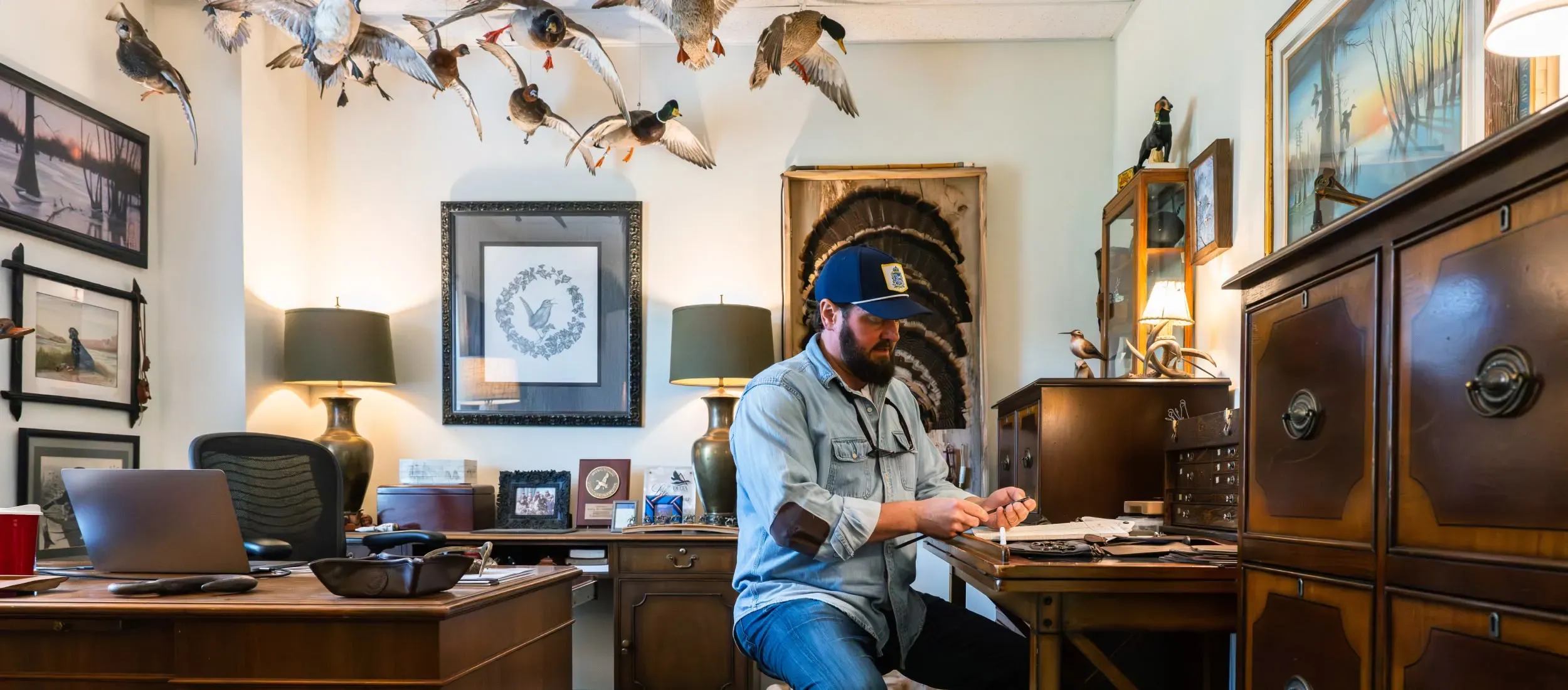
Wren & Ivy
Wren & Ivy, purveyor of premium travel and outdoor gear, offers more than just products, says owner B.C. Rogers III. Founded in 2015 with a respect for sporting traditions, their products recall a bygone era. “Like your grandfather’s jacket, they’re totems,” B.C. explains. “They represent memories of time you spent with someone and what they taught you.” From their popular Wellington Lodge Duffle and Distiller’s Travel Case to wallets and grooming kits, Wren & Ivy sells a range of goods that blend classic style with modern functionality. They’re crafted from durable leather and canvas, rugged enough to leave their own legacy. The e-commerce company has shipped to all 50 states and about 10 countries, and has seen steady 20-percent annual growth since their founding.
“I can bounce ideas off of Gemini. It’s like a song co-writer. It feels like a collaboration and it’s actually made me more creative.”
Wren & Ivy uses Gemini to assist with strategy and operations. Gemini helps the team determine optimal customer email cadences, and B.C. can write product descriptions in about 20 minutes with Gemini’s help, down from two hours before. “I can bounce ideas off of Gemini. It’s like a song co-writer,” B.C. says. “It feels like a collaboration and it’s actually made me more creative.” He also uses Gemini for research, asking “How many people carry both a laptop and iPad?” or “What size water bottle do most people use?” to inform product design. 70 percent of buyers find them via online ads, with Google Ads delivering a 5x return. Their lifestyle videos on YouTube drive traffic, and viewers get to know B.C. as he shares stories about the gear. “It’s our one-on-one with people,” he says. “They need to know that you know what you’re talking about. YouTube helps us do that.” Reflecting on Wren & Ivy’s success, B.C. remarks, “When you start out, you don’t realize what you’re chasing. The American Dream happens slowly. Then you look up one day and go, ‘This is it.’”
Products
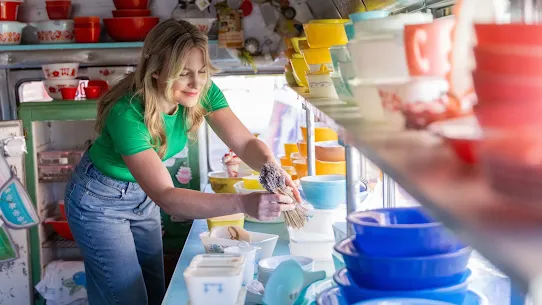
The Lucky Rabbit
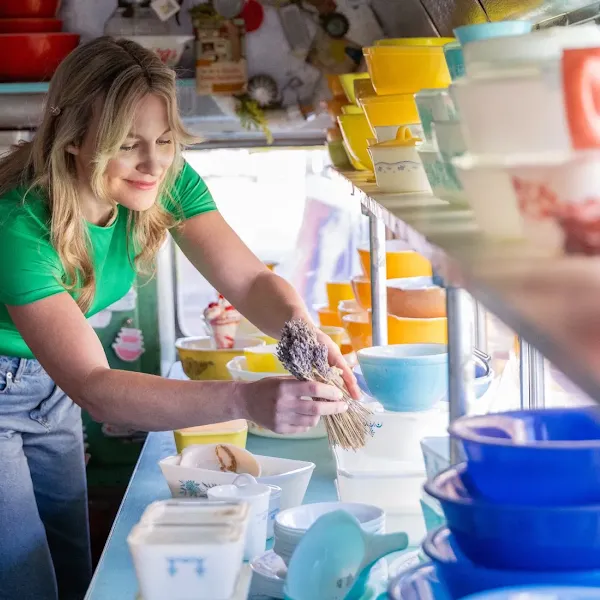
With “a big vision and a small budget,” Abby and Brandon Thaxton founded The Lucky Rabbit in 2013. The two were in their twenties and shared “a passion for collecting, repurposing, and cool finds,” Abby says. “This was our dream. We put in the blood, sweat, and tears to keep pressing forward, no matter what.” Their eclectic shopping destination now occupies 40,000 square feet across two historic buildings in downtown Hattiesburg, adding fresh life to the revitalized area. The store hosts 150 vendors selling crafts, clothing, furniture, nostalgic treasures, and more. The couple even recreates the sets of popular movies and TV shows to make each visit memorable (and selfie-worthy). 3,000 shoppers come through the doors every weekend, some driving two hours to get there.
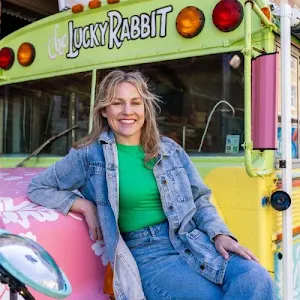
“Google Analytics helps us understand what we’re doing right and where we need to improve our marketing. As a business owner, that’s priceless.”
Lucky Rabbit’s Google Business Profile offers photos, hours, directions, and reviews–plus a website link that led to 9,000 views and 1,900 clicks on the directions page in one month. “That means 1,900 people used Google to get to our store,” Abby says. “That tells us we’re doing something right.” Google Reviews, Abby notes, shed light on what customers love and what could be improved, such as changing the store layout. “Feedback like that lets us adapt our strategy. Our sales reflect that.” She adds, “Google Analytics gives us all kinds of helpful information–it’s all a piece of the puzzle. It’s the data that helps us keep growing.” Google Workspace tools, like Gmail, Docs, and Drive, help them manage their busy operation. “We have 20 employees ages 16 to 70,” Abby says. “They can all do it. I share Sheets and Docs, and we all use Calendar.” She uses Gemini to proofread and check emails for clarity, freeing up time for her true passion–creating a fun experience and bringing commerce and tourism into her community. “Our store takes people back to nostalgic times. That gives them happiness and hope.”
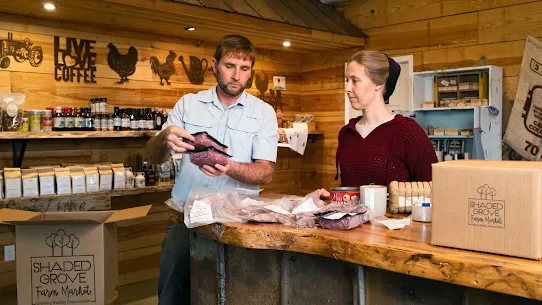
Shaded Grove Farm Market
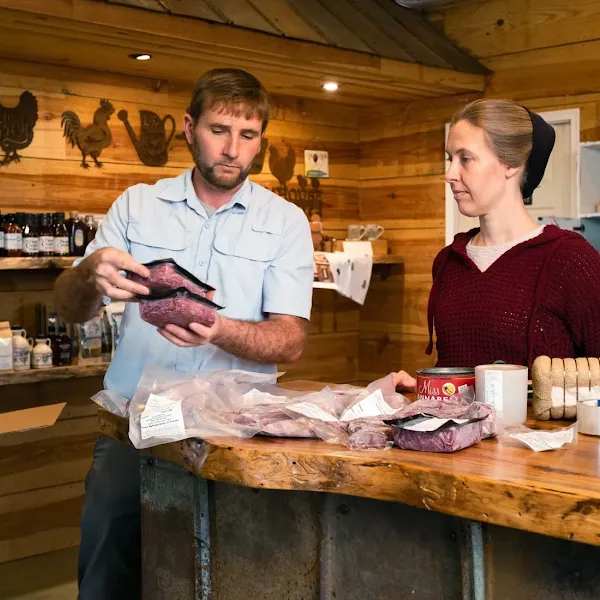
Growing up on a commodity crop farm, Craig Schmidt wondered if farming could be made friendlier to the environment and more connected to consumers. He researched grass-based regenerative farming and watched YouTube farm channels before founding Shaded Grove Farm Market in 2018 with his wife, Cheryl. What started with 150 acres, 30 sheep, and a few cows is now nearly 1,000 acres and 600 sheep, plus cattle, chickens, and pigs. Craig rotates grazing areas, doesn’t use chemicals, and sells direct to consumers wanting natural meats, eggs, and the pecans they now shell and package. “We tell our customers to come out anytime and see what we’re doing,” Craig says. “It’s important that they can see how their food is being raised.” The photos and rave reviews on Shaded Grove’s Google Business Profile attract prospective customers, and the link to Google Maps helps them find the farm.
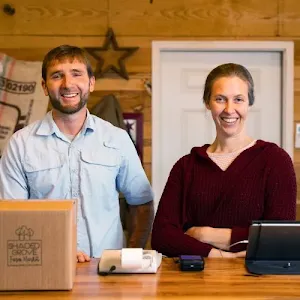
“Google Analytics shows us what regions and cities the website traffic is coming from. That helps us focus our Google Ads and social media ads on those areas.”
Customers can shop at the farm in person, online, or for delivery to select cities. Craig uses Google Workspace to keep it all organized. “I like that I can use Google Docs and Sheets across any device. We can work with other folks and share things easily,” he says. Shaded Grove now ships pecans, honey, and other nonperishables to 48 states, and frozen meat to some locations. In 2023, they had a 35-percent jump in sales. Craig credits Google Ads for increased orders and a 20-percent rise in email subscribers; he uses Google Analytics to see where traffic comes from and adjusts his Ads to those areas. As he introduces new product lines and looks to the future, he’s not losing sight of why he turned to natural farming. “Every year we do an open house for customers with a hay ride and lunch. Tonight we’ve got a customer coming for a pickup and staying for dinner,” Craig says. “Connecting with our customers, knowing what we’re producing is helping them live healthier lives…it’s tremendously fulfilling.”
BloomBridge
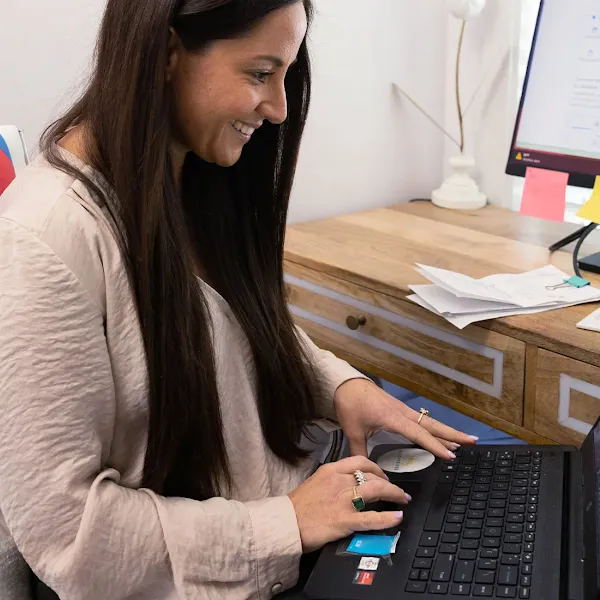
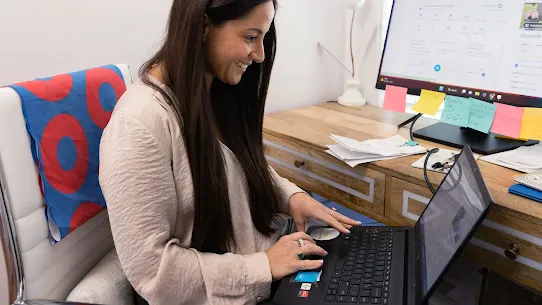
Kristen Allen emphasizes that at the heart of BloomBridge, an online service that delivers silk flowers to gravesites across America, it’s “about people and spreading love.” BloomBridge was inspired by a promise Kristen made to always put flowers on her grandmother’s grave. As CEO, she partnered with Justin Johnson, CTO, for an early iteration of the company; they joined with operations and marketing experts and rebranded as BloomBridge in 2019. BloomBridge contracts "Runners"–about 1,000 around the country–to place the flowers and take photos for clients, who often can't be there in person. Many customers try the service once, then return for one of the subscription options. BloomBridge has seen 70 percent growth since launch, and delivered arrangements–custom designed by Kristen–to cemeteries in 47 states.

“We use Google Sheets heavily to run our operations, run reports, and manage parts of the business.”
The BloomBridge team runs the company using Google Workspace. “We’ve been able to build internally from the ground up with Gmail, Drive, Meet, and especially Sheets,” Justin says. “It lets our customer service team collaborate, comment, and share details throughout the process.” Meanwhile, the positive reviews are adding up on their Google Business Profile. “That’s been a huge, huge bonus for us,” Justin notes. “A lot of people use the reviews to know that we’re a legitimate operation.” For Kristen and the rest of the team, making it easy for clients to feel a connection with a lost loved one is what it’s all about. “There’s healing and joy in it. I feel like the world needs more of that,” she says. “We’re just strangers helping strangers, and we’re spreading love one cemetery at a time.”
Products
Biloxi Shrimp Co.
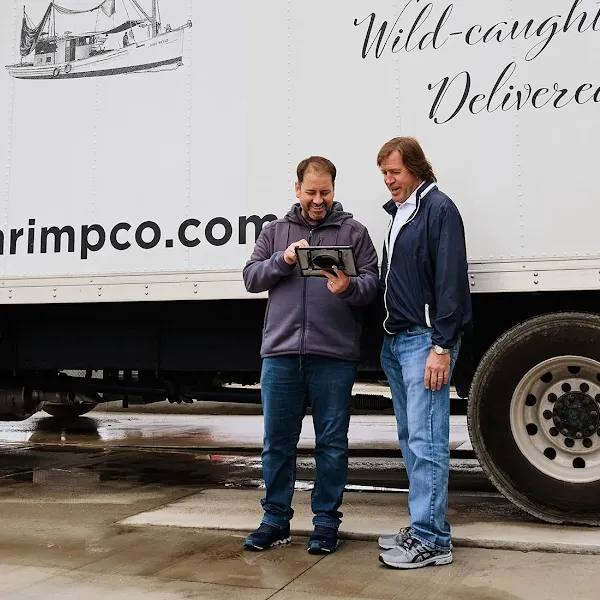
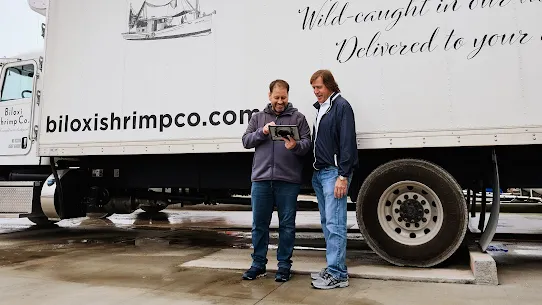
Jonathan McLendon and Mark Mavar founded the Biloxi Shrimp Co. in 2020, soon building a 20,000-square-foot production facility and a thriving wholesale business that supplied hundreds of restaurants daily. But when COVID-19 curtailed restaurant dining across America, the owners were left with a dilemma: freezers full of seafood, and no buyers. Who would buy their shrimp and keep their employees working? That’s when Jonathan had an idea: They’d sell directly to the public. “I looked at him and said, ‘That’s about the silliest thing you ever said to me,’” says Mark. Still, the pair put the word out on social media and unlocked their front doors. The first day a handful of curious shrimp buyers stopped by. A week later, cars were lined up for five blocks. As word got out, orders began coming in from as far away as Los Angeles and New York City. Suddenly, Biloxi Shrimp Co. was building a new direct-to-consumer business and brand, with its own packaging and family recipes tucked in with each order.
“Google tools make it easy for us to change our Ads and our websites. We get to measure almost everything.”
The two owners realized that to serve these new customers, they’d need to understand their needs and behavior. To do both, they turned to Google Ads and Google Merchant Center. “Google tools make it easy for us to change our Ads and our websites,” says Jonathan. “We get to measure almost everything. You can run a campaign next week and at the end of that campaign, you know who's buying, you know the demographics. It's really easy to make decisions at a fast-paced rate.” From a low of 35 employees, Biloxi Shrimp Co. is now back up to 150–and while their main wholesale business has returned, the direct sales will continue. “It’s an important area of growth for us,” says Jonathan. “The Biloxi Shrimp Co. is a piece of our heart. People are pulling our shrimp out of their freezer, our pictures are on the bag. They know just where it comes from. And that brings us a lot of joy.”
Products