
-
$19.8B of economic activity
In 2025, Google helped provide $19.8 billion of economic activity for tens of thousands of Michigan businesses, nonprofits, publishers, creators, and developers
-
565,000 Michigan businesses
More than 565,000 Michigan businesses used Google’s tools at no cost to receive phone calls, bookings, reviews, requests for directions, or other direct connections to their customers
-
$12M+ of Ad Grants to nonprofits
In 2025 alone, Google.org provided more than $12 million worth of donated search ads to Michigan nonprofits through the Google Ad Grants program
-
$42M+ in philanthropic and social impact funding
Since 2006, Google and Googlers have given more than $42 million in funding (cash grants, social impact funding, employee donations, and gift match) to organizations and nonprofits in Michigan
-
33,000+ volunteer hours
Since 2008, through Google.org, Google employees volunteered more than 33,000 hours with nonprofits and schools


$19.8B of economic activity
In 2025, Google helped provide $19.8 billion of economic activity for tens of thousands of Michigan businesses, nonprofits, publishers, creators, and developers
565,000 Michigan businesses
More than 565,000 Michigan businesses used Google’s tools at no cost to receive phone calls, bookings, reviews, requests for directions, or other direct connections to their customers
$12M+ of Ad Grants to nonprofits
In 2025 alone, Google.org provided more than $12 million worth of donated search ads to Michigan nonprofits through the Google Ad Grants program
$42M+ in philanthropic and social impact funding
Since 2006, Google and Googlers have given more than $42 million in funding (cash grants, social impact funding, employee donations, and gift match) to organizations and nonprofits in Michigan
33,000+ volunteer hours
Since 2008, through Google.org, Google employees volunteered more than 33,000 hours with nonprofits and schools
Featured businesses
Vetr Health
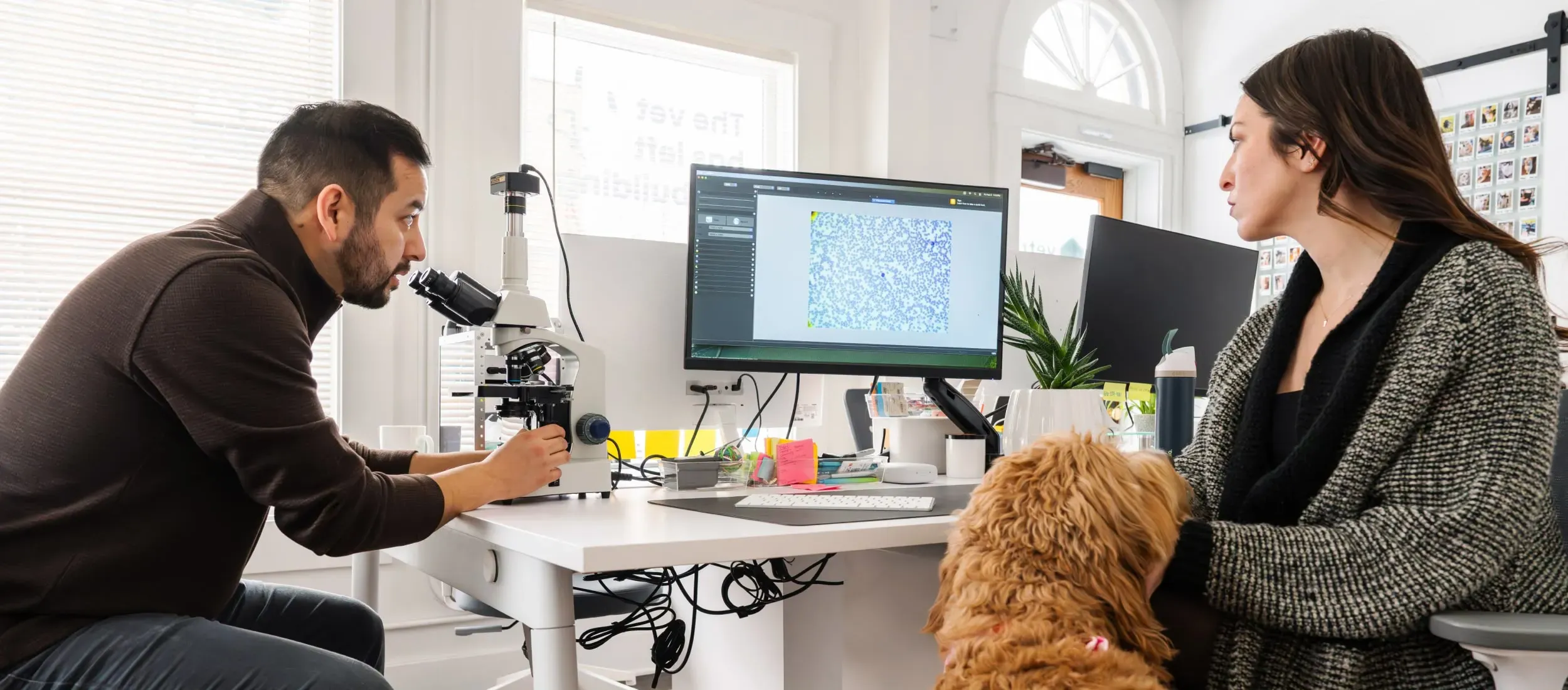
When Rachel Berkal and Sadoc Paredes got a puppy, they were used to grocery delivery and telehealth services, so they were frustrated that most veterinary care was still in-clinic. The couple, along with Sadoc’s sister, Ruby Paredes, and Brad Boike, Doctor of Veterinary Medicine, founded Vetr Health in 2022 to bring in-person, convenient care to pets in their own homes. They weren’t surprised by the demand from clients, recalls Rachel, Vetr’s COO, but the flood of vets wanting to join the startup was an “aha moment.” “Vets are struggling with overwork and burnout,” she explains. “By going mobile, they can set their own schedules and have a better work-life balance.” Expanding from lab service and an office for their own mobile vets, Vetr is now productizing their practice management software, Vetr AI, which handles scheduling, transcription, record summaries, diagnostics, and more.

“Google Cloud is the true engine of our innovation. It provides secure, scalable infrastructure and the computing power we need to run complex AI models.”
Vetr AI is hosted on Google Cloud’s Vertex AI platform. “It provides secure, scalable infrastructure and gives us the computing power we need,” says Sadoc, Vetr’s CEO. “And the accuracy and speed of Cloud’s Speech-to-Text for transcription is second to none.” Gemini Notebook helps the team analyze dense scientific text and market shifts, drawing only from the industry studies they choose. Vetr was part of Google for Startups AI Academy in 2025, and benefits from a vast network of mentors and AI training. “We learn how to best apply the tools as founders, like using Gemini to prep for an investor call. I never would have thought to use it that way,” Rachel notes. Vetr saw 158-percent revenue growth in 2025 and has plans to expand beyond Michigan; their goal is to halve admin time for mobile vets. “We want to empower more mobile vets by helping them operate efficiently,” says Sadoc. Adds Rachel, “Vetr’s mission is to let vets be vets, not data entry clerks, and Google AI helps make that possible.”

Headshots by Scott Lawrence

People often tell Scott Lawrence that they’d rather go to the dentist than get a professional photo taken. “My job is to make it as fun as possible, and quick and painless,” says the owner and operator of Headshots by Scott Lawrence. Since starting his business in 2015, Scott has been drawn to the portrait discipline, focusing solely on headshots of lawyers, veterinarians, and other busy professionals. To help find new clients, he turns to Google Ads Performance Max campaigns, which drive up to 30 percent of his website traffic. “Google Ads help fill my schedule with great clients every month,” Scott says. “Google is effective when somebody’s trying to find something quick. Often those clients then turn into an ongoing business relationship.”

“I don’t think it’s an exaggeration to say that Google products are one of the main contributors to my growth over the last four or five years.”
Scott also reaches new clients through his YouTube channel–started years ago but formally launched in 2019–with short videos that offer advice on preparing for a headshot. They were so popular that within a year he was able to run YouTube ads and earn money from his channel. He now has 6,200 subscribers and adds 100 to 150 more every month. “YouTube has driven more growth in my business than I can quantify,” he says. “People have told me specifically, ‘We hired you because we saw your videos.’” Scott has more than doubled his annual revenue since 2021, and as his business grows, he’s exploring how Google AI tools can help him work more efficiently. For example, he uses Gemini to brainstorm new business strategies and content ideas. “To be able to take a transcript from a YouTube video and turn it into a blog post, that’s really helpful,” Scott notes. He’s also tapping Gemini Notebook to get himself up to speed on new technologies as he looks into adding video services. “These tools are so important because we just don’t have the capacity to do all the things,” Scott says. “Anything that can help very small businesses like me is a win!”
Products
Hush
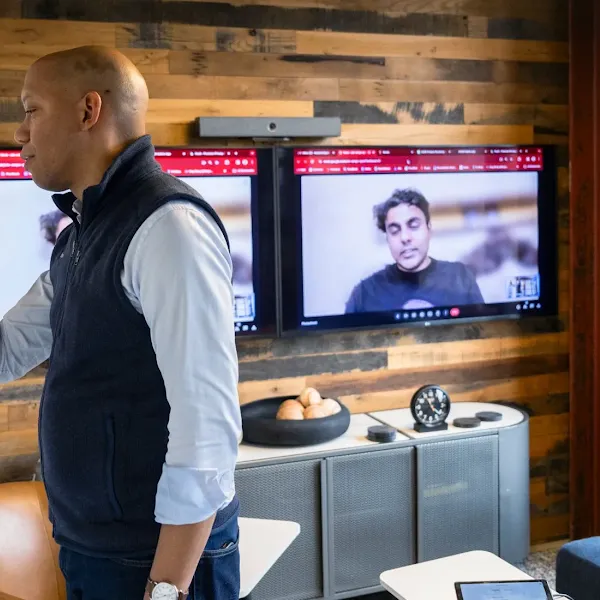
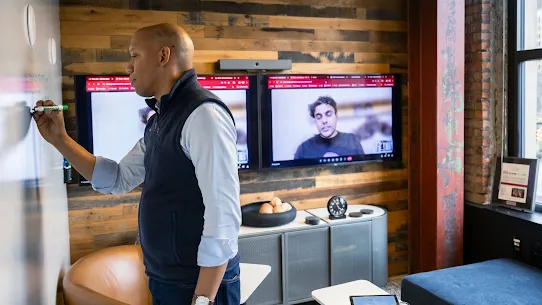
Mykolas Rambus founded Hush in 2022, using the power of AI to protect families, employees, and their communities from the growing threat of malicious cyberattacks. Hush is headquartered in Detroit, where Mykolas was born and raised. “It’s a city where you put your shoulder into your work and help others do the same,” he says. Working in consumer data, he discovered that many successful corporate cybersecurity threats and identity thefts use reconnaissance to make phishing attacks sound credible. Hush alerts workers to spots where private information is vulnerable–such as where their home address can be found online–then makes it one-click easy to remove it. “As the saying goes, it’s a lot easier to hack a person than it is to hack a computer,” Mykolas notes. “The less information the bad guys can find about good individuals, the harder their job is.”

“Google Ads is incredibly important because it allows us to place ourselves more broadly, where we wouldn't otherwise be considered. That helps us generate leads.”
Hush’s global workforce uses Google Meet, Drive, and other Workspace products to stay connected. “We find the best talent wherever it is, so it’s incredibly important to have flexible tools that allow us to coordinate across time zones,” Mykolas explains. “Our business would look very different without the kind of collaboration tools we trust from Google.” Hush uses Google Ads to increase visibility about their services. “We can reach people at the right time, when they’re urgently looking for a solution to their problem,” Mykolas says. He uses features within Gmail like Smart Compose, Smart Reply, and Tabbed Inbox to streamline workflows and prioritize his objective: securing and helping more clients. “All the studies show how fast prospects lose interest if you don't reply to them quickly enough. Messages sent via Smart Reply that are personalized for me or my sales team make a real difference,” he says. “It’s also an indicator of how we think about our efficiency. Every place we can cut out minutes from our day, that matters.”
Products
Detroit Voltage
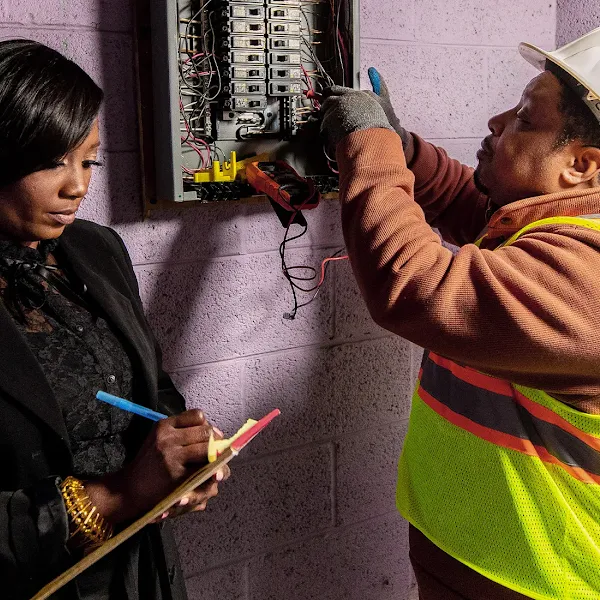
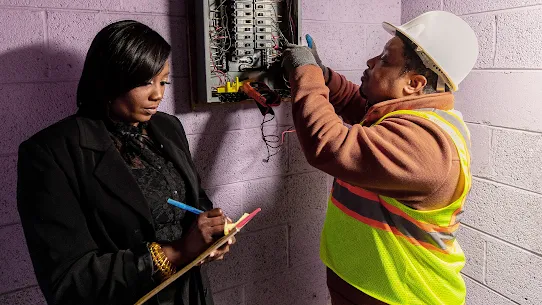
The only thing Deana Neely knows better than electrical contracting is the city of Detroit. After a decade working for the Detroit Buildings, Safety, Engineering, and Environmental Department, she decided to use her knowledge and experience to found Detroit Voltage in 2016, offering a reliable contracting service to the underserved residents of the city. “Many contractors refuse to come into the city itself,” Deana explains. “But this is the city that raised me. I feel an obligation to serve my community in a way that others won’t.” Detroit Voltage has used digital tools like Google Ads to reach customers looking for skilled and conscientious electrical contractors, and their Business Profile on Google helps them highlight and showcase their many positive reviews from customers they’ve already helped.

“Google products have been life-changing for our business. I want to share that with as many people as I can.”
When COVID-19 suddenly short-circuited business as usual in Michigan, Detroit Voltage turned to Google Analytics to understand exactly what customers were looking for, and quickly pivoted to serve their needs. They started offering germicidal UV lighting options for safety-conscious customers, and smart home devices for increasingly house-bound customers. Google Workspace products like Gmail and Google Sheets have helped them communicate efficiently and easily keep track of all their contractors remotely. Thanks to Deana’s innovative thinking, Detroit Voltage maintained 40-percent year-over-year (YoY) growth in 2020, and they plan to expand and hire additional contractors in 2021. “Google has really helped us grow and scale our business, and that empowers us to keep doing more for our customers and our community,” she says. And that’s how this Detroit business is engineering a brighter tomorrow.
Suburban Bolt and Supply
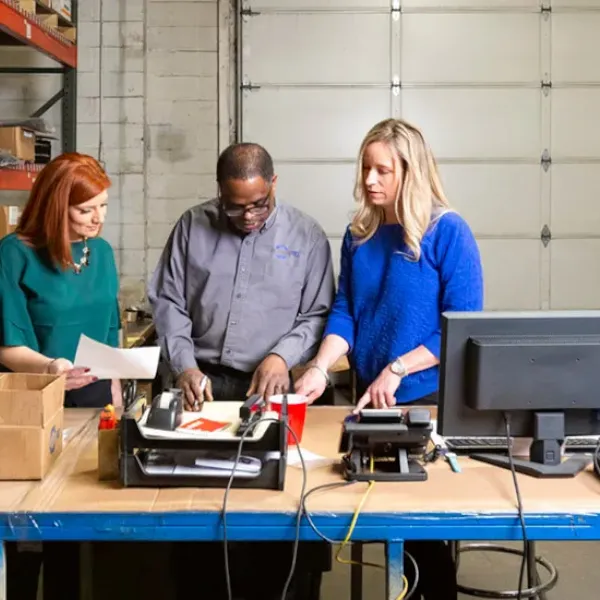
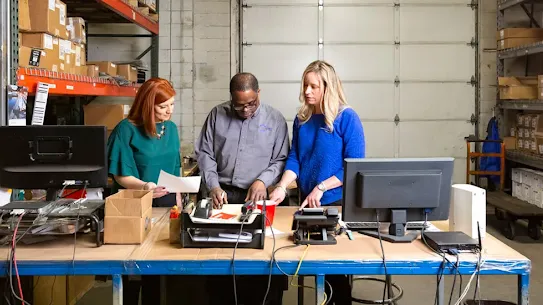
In 1971, two veterans, Jerry Kelley and Carl “Pete” Peterson, founded Suburban Bolt and Supply, a company that provides industrial products to clients in the greater Michigan area. More than 40 years later, the company is flourishing under the leadership of their children, Jerilynn Pintar and Eric Peterson. “At first, we both did pretty much everything we could to run away from the family business,” said Eric. “But eventually we decided to make a go at it because it was something our dads created and it’s filled with good people who care.” Jerilynn was driven to get Suburban Bolt and Supply’s employees familiar with digital. The company established an online ordering system in 2006 but quickly moved away from e-commerce when the team realized their digital strategy wasn’t driving enough sales. “We didn’t have an awareness campaign,” said Jerilynn “So while you could place orders online, no one knew we offered that option.”
“Google Analytics gives us the data and metrics we need to make smarter marketing decisions.”
In 2016, Suburban Bolt and Supply brought on Nikki Gordon, a digital marketing specialist, to iron out its digital strategy. Nikki started using Google Ads and Google Analytics to reach potential clients and learn more about their search habits. “We found that there was a strong need for the services that we provide and the commodities that we sell,” she said. “There was a huge amount of search volume out there, so we utilized it.” Based on that information, Suburban Bolt and Supply began tailoring its search campaigns to better reach consumers and drive traffic to its website. “Google Analytics gives us the data and metrics we need to make smarter marketing decisions,” Nikki said. The company also uses Google My Business to boost visibility on Google Maps and Google Search and to respond to customer reviews. “Within a couple of clicks, we know how people found us,” said Nikki.
Today, Google Ads accounts for about 40% of the company’s website traffic. According to Nikki, search campaigns generated 1,300 leads that resulted in 126 new customers. “We plan to continue to grow moving forward — even more so now with Google behind us,” said Eric. Having established a successful digital strategy, Suburban Bolt and Supply plans to reinstate e-commerce sales in the near future. But for now, the company is focused on sustaining its growth, taking care of its people, and making an impact within the local community. “Donating to charities is important to our staff,” said Jerilynn. “The best part of working here is that we really are a family. We look out for each other. That’s one of the reasons our employees love being here and our customers love buying from us.”
Products
Ann Arbor

Detroit