
-
$13B of economic activity
In 2025, Google helped provide $13 billion of economic activity for tens of thousands of Utah businesses, nonprofits, publishers, creators, and developers
-
204,000 Utah businesses
More than 204,000 Utah businesses used Google’s tools at no cost to receive phone calls, bookings, reviews, requests for directions, or other direct connections to their customers
-
$6M+ of Ad Grants to nonprofits
In 2025 alone, Google.org provided more than $6 million worth of donated search ads to Utah nonprofits through the Google Ad Grants program


$13B of economic activity
In 2025, Google helped provide $13 billion of economic activity for tens of thousands of Utah businesses, nonprofits, publishers, creators, and developers
204,000 Utah businesses
More than 204,000 Utah businesses used Google’s tools at no cost to receive phone calls, bookings, reviews, requests for directions, or other direct connections to their customers
$6M+ of Ad Grants to nonprofits
In 2025 alone, Google.org provided more than $6 million worth of donated search ads to Utah nonprofits through the Google Ad Grants program
Featured businesses

Skimble
A lifelong athlete, Maria Ly Vanrenen began developing Skimble’s Workout Trainer app to support her own fitness journey. “I was just getting into rock climbing, while working as a computer engineer and product manager,” she recalls. “So I built a prototype to train for the sports I loved.” It didn’t take long to realize the idea could help others. “Most people would love to work with a personal trainer, but real-life constraints often get in the way,” she says. Maria launched the first version of the app during the early days of smartphones, creating workouts for both at-home exercisers and outdoor enthusiasts. Today, the app partners with certified personal trainers to deliver follow-along multimedia workouts for goals like cardio, strength, and mobility. Users can track progress and stay motivated through virtual communities. Built as a bootstrapped business with an organically grown user base, Skimble has surpassed 30 million tracked workouts.

“Google Play is a wonderful marketplace for showcasing our app to the global community. The robust tools make it easier for us to focus on helping more people.”
Google AI products help Maria scale across 80 countries and support content in 12 languages. The app runs on Google Cloud and uses TensorFlow for machine learning modeling; it’s trained on more than 8 million workouts to deliver highly customized fitness plans. “Google AI helps us deliver personalized training plans and video-based form analysis,” Maria explains. Using Gemini, the app analyzes user-submitted videos to generate individualized form scores, actionable feedback, and training tips. “We’ve seen three times the engagement from members who use our AI features,” she adds. “These tools are meaningfully enhancing the online fitness journey for our members.” With nearly 100,000 4+ star reviews on Google Play alone, Skimble’s reach continues to grow. “It’s incredible to think we’ve built something that resonates with people all over the world,” says Maria.
Products
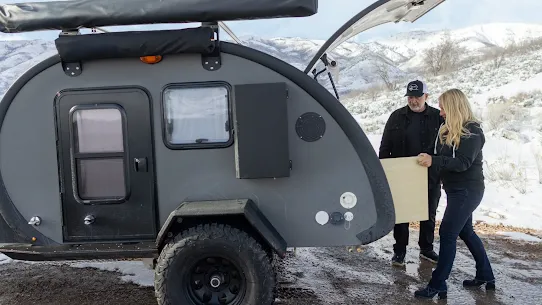
Bean Trailer
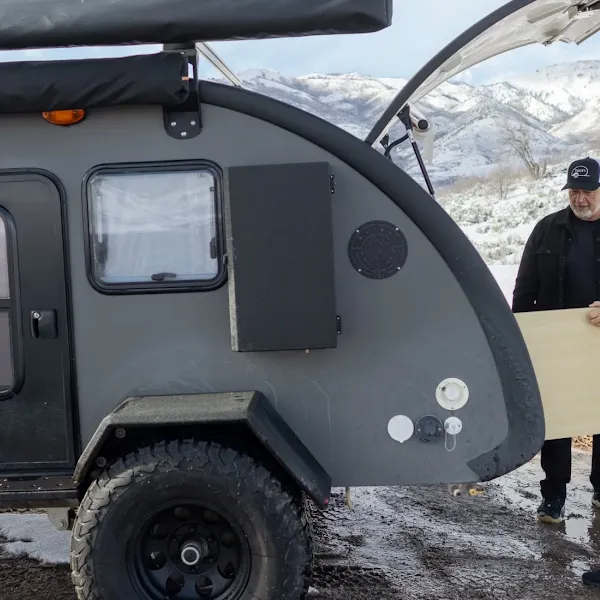
Bean Trailer co-founder Mark Harling and his wife, Cindy, are avid mountain bikers who enjoy exploring Utah’s rugged terrain. “We play hard, but we like our creature comforts and some luxury at the end of the day,” says Mark. He’d been searching for an off-road teardrop trailer that combined quality construction with easy towing, but–being a manufacturing expert himself–he was having trouble finding one that met his standards. In 2017, Mark and long-time business partner Brian Dyer co-founded Bean Trailer, named after Mark’s granddaughter whose middle name is “Bean.” They created the Classic Bean in 2018. “There’s nothing new about teardrop trailers, but we build ours with a one-piece fiberglass shell, eliminating seams where water can seep in,” Mark explains. “We made it to be roomier and more durable, in modern textures and finishes.” They now have 76 employees and offer seven retro-styled models touting convenience and off-road toughness, like the Mean Bean.
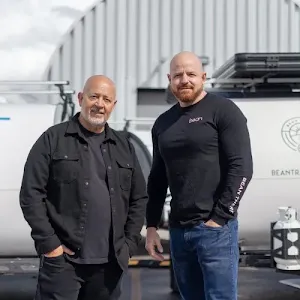
“Google Ads have by far been the most effective vehicle for driving buyers to Bean Trailer.”
To help people searching for “small trailer” and “off-road trailer” discover their products, Bean Trailer uses Google Ads, which account for about 15 percent of their business. Google Analytics 4 helps them learn how customers, including their primary demographic of 55+ empty nesters, navigate through their website–which enjoys 1.5 million sessions a year. YouTube Ads are their “highest converting campaigns,” Mark says, helping to grow their YouTube channel where videos take consumers on detailed walkthroughs that highlight the trailers’ features. The team also uses Gemini to brainstorm ideas for marketing content. Now, Bean Trailer is developing new vehicles and a presence in RV dealerships. And their “Bean There” mobile app lets their community upload photos and post about their off-grid experiences. “We want to be part of our customers’ adventures,” Mark says. “Life is short. Get out there and enjoy it.”
Products
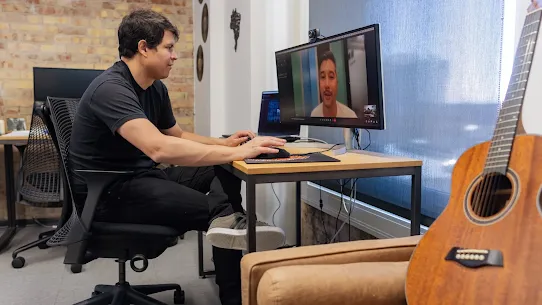
Moises Systems
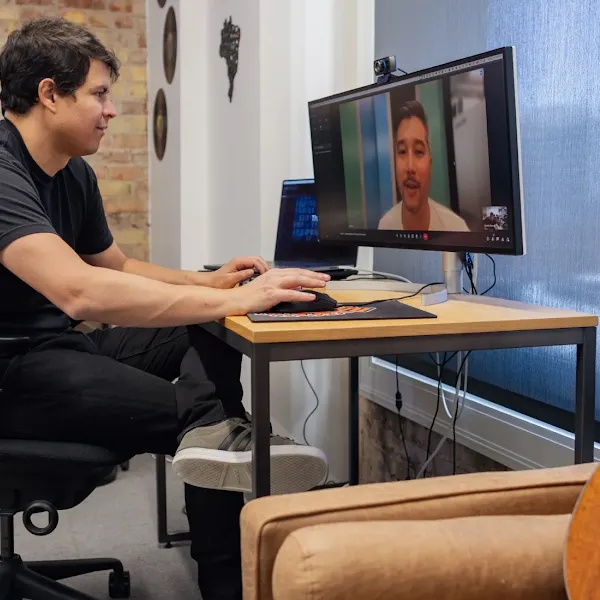
Founded in 2019 by drummer and tech entrepreneur Geraldo Ramos, Moises Systems connects Geraldo’s two passions with a suite of AI-driven tools for musicians. “The reason I started Moises was actually to serve my own needs as a drummer,” Geraldo explains. “Our AI can separate the vocals from the drums, from the guitar, from the bass to allow musicians to practice.” Moises Systems’s offerings have since expanded to a voice synthesis platform and tools for producers, including generative models that help musicians create and complete songs. “Our view on AI is really focused on empowering human creativity,” he says. “We want to create solutions that augment the musician and producer as opposed to creating something fully automated.” With growth doubling annually, Moises Systems now processes over a million minutes of audio daily for around 40 million users.

“About 78 percent of our app downloads come from Google Play. It’s very important to us.”
All of that audio goes through Google Cloud, where Moises Systems runs its AI models in order to scale. They have over 29 million downloads from 252 countries on Google Play, accounting for about 78 percent of their overall app downloads. To expand their reach and jumpstart growth in new regions, Moises Systems began using Google Ads in early 2023, and Ads now account for 20 to 30 percent of new users each month. “It has become a meaningful acquisition channel that delivers a significant amount of new subscriptions,” Geraldo says. They use YouTube to share product releases and tutorials with their 24.3 thousand subscribers and host independent artists for in-studio performances. As the company grows, Geraldo shares plans to broaden their reach: “We have over 50 different models for music and audio that are powering companies in the B2B space,” he says. “So that’s one of the big themes for 2024, and it’s already in motion–to evolve from a purely consumer application to a platform that all companies can leverage.”
Products

Redrock Ballooning

“I’ve wanted to be in the sky since I was a little kid,” says Jimmy Peterson. The owner and pilot of Moab-based Redrock Ballooning founded his business in 2020 to share bird’s-eye views of Utah’s stunning terrain with customers, offering sunrise flights over areas like the nearby national parks. Jimmy admits the timing of his business launch was challenging. “I had just bought the hot air balloon when COVID-19 hit and everything shut down,” he recalls. “It was three months before I had my first flight with customers. I had spent almost every last penny I had, so it was very scary.” Jimmy bounced back by using Google Ads and a Google Business Profile to spread the word about Redrock Ballooning. “Using Google tools makes running my business extremely easy,” he says. By the next year, revenue had doubled and the number of customers was soaring. His Business Profile now showcases photos and a growing number of five-star reviews.

“I ask each customer how they found me and 99 percent of them say it was through Google.”
Jimmy improves his results on Google Search by adding detailed information called 'structured data' to his website. That helps him match user queries more accurately, and helps the users have richer interactions with his site. “I ask each customer how they found me,” he says, “and 99 percent of them say it was through Google.” Jimmy has already upgraded to an 8-person balloon, and plans to add additional pilots and a 16-person balloon soon. He piloted 115 flights over the March–November season in 2022, allowing 600 people to enjoy canyons and rock formations from a unique perspective. Jimmy also donates flights to fundraising auctions to support local charities like Underdog Animal Rescue and Community Rebuilds. Today Jimmy is living his childhood dream. “Getting to share my passion with other people, and see the golden hour glow at sunrise with all the red rocks is mind-blowing,” Jimmy says. “It’s a cool way to make a living, that’s for sure.”
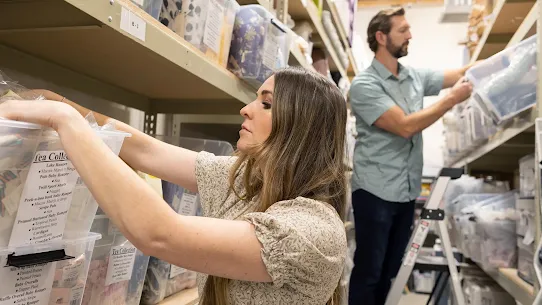
The Baby Cubby
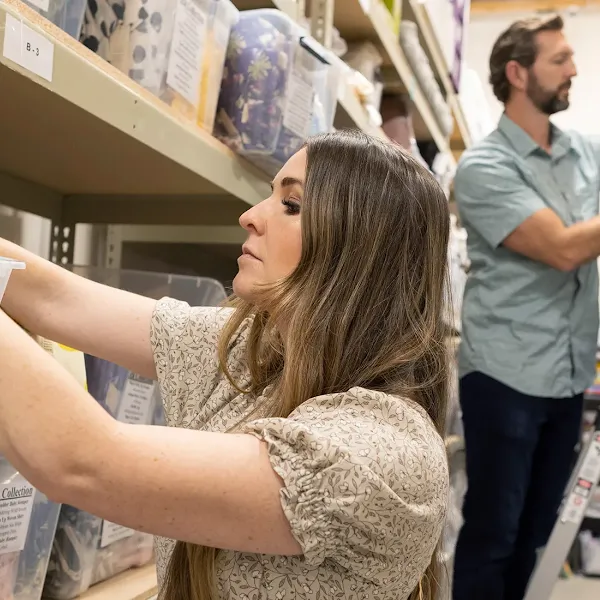
As parents of five children, Cameron and Jacquelyn Muir knew shopping for baby gear could be stressful and confusing. “Seeing products stocked floor-to-ceiling in the big box stores was overwhelming,” Jacquelyn says. “And with retail associates who couldn’t always answer your questions, it was hard to know which stroller or car seat to choose.” In 2013, they founded The Baby Cubby store and e-commerce site “to celebrate parenthood by making decisions and shopping a lot easier.” Team members receive in-depth product knowledge training, with six state-certified Child Passenger Safety Technicians on board. The Muirs have also created more than 500 YouTube videos, offering product reviews and how-to guides to educate parents and inform their purchasing decisions.
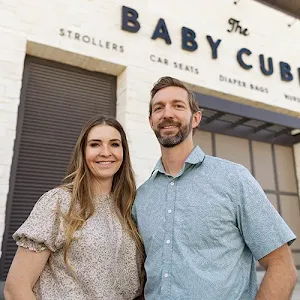
“Google has played a large part in our marketing from the start, helping parents discover our brand and helping our business grow.”
”A big part of our strategy was figuring out how to drive traffic to our store and website,” Cameron notes. They use Google Ads to reach parents searching for strollers and sippy cups, and Google Analytics to learn which marketing campaigns work best. Their Google Business Profile lists hours and directions, along with featured products and hundreds of customer reviews. Since 2019, in-store business has increased 40 percent and online sales are up 300 percent. They employ 45 people, with plans to open a second store in Salt Lake City in 2022. “We want to create a workplace where we can improve people’s lives–where people feel they can make a difference by enriching the lives of families,” Cameron says. They give back by supporting area hospital neonatal intensive care units (NICUs), including creating gift bags for new moms. Going forward, Cameron says they’ll continue to use Google products to grow the Baby Cubby brand. “We want to help parents find us,” he says, “and when they do, we want them to feel at home.”