-
$18.2B of economic activity
In 2025, Google helped provide $18.2 billion of economic activity for tens of thousands of Arizona businesses, nonprofits, publishers, creators, and developers
-
384,000 Arizona businesses
More than 384,000 Arizona businesses used Google’s tools at no cost to receive phone calls, bookings, reviews, requests for directions, or other direct connections to their customers
-
$13M+ of Ad Grants to nonprofits
In 2025 alone, Google.org provided more than $13 million worth of donated search ads to Arizona nonprofits through the Google Ad Grants program


$18.2B of economic activity
In 2025, Google helped provide $18.2 billion of economic activity for tens of thousands of Arizona businesses, nonprofits, publishers, creators, and developers
384,000 Arizona businesses
More than 384,000 Arizona businesses used Google’s tools at no cost to receive phone calls, bookings, reviews, requests for directions, or other direct connections to their customers
$13M+ of Ad Grants to nonprofits
In 2025 alone, Google.org provided more than $13 million worth of donated search ads to Arizona nonprofits through the Google Ad Grants program
Featured businesses

MoveCars.com
Nick Padgett had been working in the automotive space for over a decade when he acquired MoveCars.com in 2024. The company was founded in 1997 as a simple digital "yellow pages" for vehicle transporters. Nick, a software engineer, saw an opportunity to improve the car shipping industry, where pricing and policies are often unclear. His mission was bold: transform the site so that people who want to move their cars can find and compare auto transporter options with total pricing transparency and end-to-end simplicity. Move Cars is now a sophisticated, feature-rich marketplace. It has a database of 4.4 million transport providers and attracts 6,000 organic visitors every month.
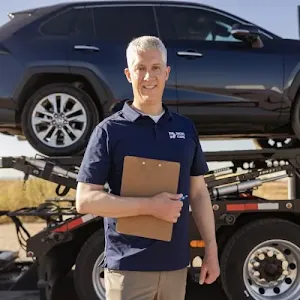
“Gemini has helped me clearly identify and communicate what my company’s value is, who my customers are, and to think about problems in unique ways.”
Nick used Google Antigravity, an agentic development platform, to help him write software. To build Move Cars' real-time pricing feature, he simply dropped in documentation and explained his goal, and Antigravity translated his "business speak” into an enterprise-grade system. “My team can work with it, too, so now they have better quality code,” he says. “We’ve seen a two- to threefold increase in the number of features we’re pushing out to production.” Nick, who says he’s “straight to the point,” also uses Gemini as a communications filter; it helps him create professional, concise emails, eliminating confusion and speeding up the buyer journey. In 2025, Move Cars started using Google Ads, doubling their website traffic by capturing high-intent users. As he scales, he’s teaching recent college graduates to use AI to evolve from coders into true systems architects, helping the next generation reach their destinations, too.
Products
Sensagrate
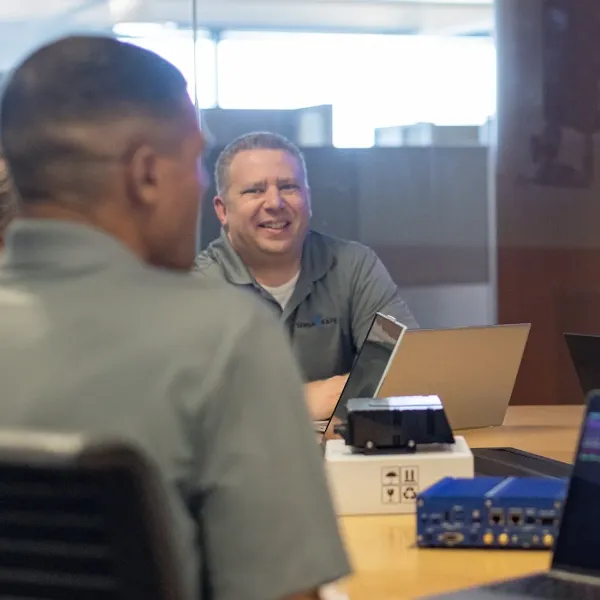
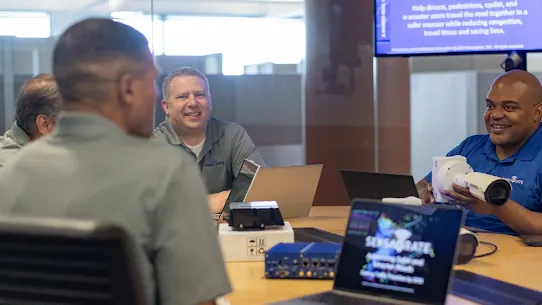
“We’re developing technology that can help save the lives of road users,” says Darryl Keeton, founder of Sensagrate, an AI data and analytics platform that helps make roads safer. Recognizing the growing complexities on our roads for all who use them, Darryl spotted an opportunity to apply his background in technology risk management and the transportation sector to create a solution. “I saw a gap in the infrastructure connecting drivers, cyclists, pedestrians, and even e-scooters,” he explains. “How come the infrastructure isn’t providing value to everyone on the road to help with their decision making? I wanted to give road users the information to make safer and smarter decisions.” Tapping into existing cameras, and adding LiDAR and radar sensors, Sensagrate uses deep-learning computer vision software to provide public safety officials and traffic engineers with the data analysis they need to design safer urban spaces.

“The reliability of Google Cloud's uptime checks enables us to maintain 24/7 operations and supports our contracting.”
With Google for Startups, Sensagrate took advantage of training, mentorship, referrals, and networking opportunities. “It’s helped us create new business leads, not just for customers but also investors and partnerships,” Darryl says. In fact, Sensagrate expects to double their revenue in the coming year. Sensagrate uses Google Cloud to host their data storage and web app, helping them cut costs and gain new contracts. “The reliability of Google Cloud's uptime checks enables us to maintain 24/7 operations and supports our contracting," Darryl says. His team is also currently experimenting with Google Maps API for route planning. Plus, their latest application, SurePath, will provide new national data on situational awareness and weather conditions for safety applications, such as alerting emergency responders. Says Darryl, “We're starting to see how we can help optimize route planning with some of our partners to make commutes safer and smarter.”
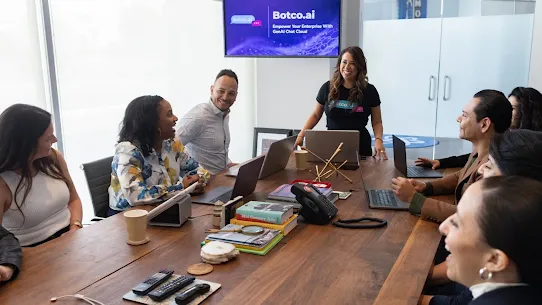
Botco.ai
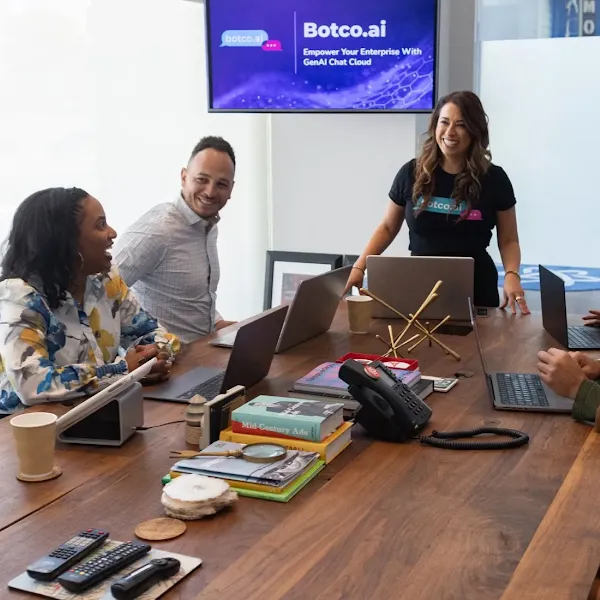
Rebecca Clyde has always been an entrepreneur. Growing up in Latin America, she sold cookies and taught ballet lessons to earn spending money. As an adult, after nearly a decade at Intel and founding a successful marketing automation company, she experienced a more serious challenge. Furious after days of trying to refill her daughter’s prescription for asthma, she thought, “This is not acceptable. This is a problem for everyone, and there's a big opportunity if we solve it.” So in 2020, she co-founded Botco.ai with Anu Shukla and Chris Maeda, creating AI-powered chatbots that quickly connect patients to the critical resources and support they need. And in 2023, Rebecca was a recipient of the Google for Startups Founders Funds, which provides access to vital resources and connection with a supportive community of underrepresented founders.
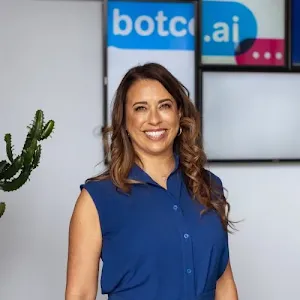
“Google tools are accessible and easy to use while also supporting scalability and growth.”
Botco.ai’s technology is built using Gemini as the foundation for their domain-specific and fine-tuned models. “Google AI helps provide the safety and privacy guardrails necessary to support a highly compliant, high-stakes industry like healthcare,” Rebecca says. They use Google Dialogflow to ensure that their chatbots can handle pre-approved conversational workflows, while Device Manager and Google Workspace support SOC2 and HIPAA compliance requirements. The fully remote team also uses Workspace to collaborate from anywhere, allowing Rebecca to tap into AI talent across the globe. “I need specific skill sets and couldn’t build my company if I were geographically constrained,” she says. “I need tools that allow me to do that.” Today, Botco.ai serves many of the world’s largest healthcare brands, and offers multilingual chats to make their services more accessible. Revenue is doubling annually, and Rebecca’s goal is to triple in 2024. “It shouldn’t be so hard to navigate healthcare systems,” she says. “I got a unique view into that.”
Products
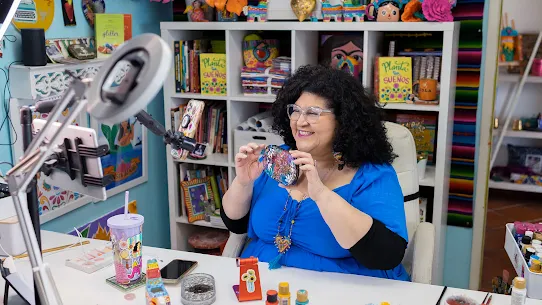
Crafty Chica
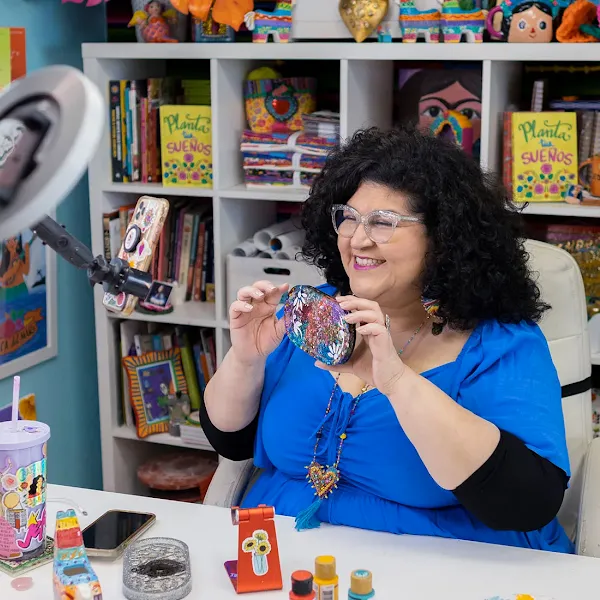
Kathy Cano-Murillo describes her Crafty Chica website as “a world of Latina DIY, including crafts, recipes, home decor, travel, storytelling, and entrepreneurship.” Since launching in 2001, Kathy’s blog, website, and social media profiles have helped grow her brand into a full-time business, attracting book deals, speaking engagements, partnerships, and sponsorships. She’s even hosted craft-themed camps and cruises where she can “inspire others to bring out their inner sparkle—and to see the sparkle in others.” Business really began booming during the COVID-19 pandemic, where people at home were searching for fun crafting projects. “My traffic went crazy, because people wanted to find ways to save money and still be creative,” Kathy says. Google tools help her stay organized and maintain that increase in business.

“Google tools make it easy for someone like me, who is busy juggling so many things. I have all my resources right there.”
Google Workspace, including Google Docs and Slides, let Kathy create and share presentations with business partners. And Google Ad Manager helps her deliver and manage ads on her blog. “You can make thousands of dollars a month with a blog, if you dedicate time to it,” she notes. “It's great passive income.” Google Analytics helps her learn where her audience comes from, what posts they’re viewing, and how long they stay. “This helps me craft landing pages and more posts about what interests them,” she says. For example, a post on “things to dip in chocolate” really hit users’ sweet spot, so Kathy created more content around that tasty topic. She pays it forward by inspiring and advising younger creators: “I’m excited to share my experiences, to motivate them to do what they love to do.” Next up: launching her own giftware line. “I am a fourth-generation Mexican American honoring my ancestors’ traditions of sewing, building, and creating,” says Kathy. “I am living their wildest dreams.”

Exclusive Tents

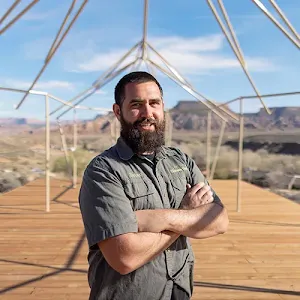
Growing up in a city didn’t keep Paul Zway, a former game ranger and founder of Exclusive Tents, away from nature. As a child in South Africa, he had a menagerie that included a jackal, monitor lizards, an owl, and over 200 snakes. “My mother was a saint,” he recalls. Paul started Exclusive Tents in 2005 so that others could connect to nature without sacrificing luxury. “Glamping was unknown outside of Africa,” Paul says. “So we developed a market and a name for ourselves.” The Tucson-based company–a partnership since 2018 with the Johan Maree family–designs and creates quality tents that are four-season “alternate living structures.” Customers range from large resorts to celebrities to people using the tents as temporary homes during renovations. “Tent living is gaining traction. It gives people the ability to have a movable asset,” Paul says. He and his wife have themselves been living in a tent for nine years.
“Google Ads brings us exposure and leads. We’re able to get creative with keywords to find customers in different ways.”
An avid traveler, Paul designed the business to be virtual and mobile. When sons Zane and Anders Zway and Brian Grisham joined the company, it was crucial to be able to collaborate from anywhere. “They all take off, into the desert, on site visits, but we work no matter where we are,” Paul explains. Brian conferences with clients via Google Meet, and the team works together with Google Docs and Sheets. To reach customers around the world–including the fast-growing U.S. glamping market–they’ve used Google Ads since 2006. “It brings us exposure and leads,” Brian says. “We’re able to get creative with keywords to find customers in different ways.” Their website now garners over 30,000 views a month, but the company’s priority remains connecting clients with nature and conserving the natural assets of a site. “Our whole thing,” Paul says, “is to effectively integrate your living space with your natural environment, without harming that natural environment.”