
-
$11.4B of economic activity
In 2025, Google helped provide $11.4 billion of economic activity for tens of thousands of Tennessee businesses, nonprofits, publishers, creators, and developers
-
409,000 Tennessee businesses
More than 409,000 Tennessee businesses used Google’s tools at no cost to receive phone calls, bookings, reviews, requests for directions, or other direct connections to their customers
-
$6B investment in Tennessee
Since the Montgomery County, Tennessee data center was built in 2018, Google has invested more than $6 billion in the state1
Investment methodology now reflects total data center investment (construction, server and networking infrastructure). Learn more. -
$20M+ in philanthropic and social impact funding
Since 2006, Google and Googlers have given more than $20 million in funding (cash grants, social impact funding, employee donations, and gift match) to organizations and nonprofits in Tennessee
-
10,000+ volunteer hours
Since 2013, through Google.org, Google employees volunteered more than 10,000 hours with nonprofits and schools
-
$11M+ of Ad Grants to nonprofits
In 2025 alone, Google.org provided more than $11 million worth of donated search ads to Tennessee nonprofits through the Google Ad Grants program


$11.4B of economic activity
In 2025, Google helped provide $11.4 billion of economic activity for tens of thousands of Tennessee businesses, nonprofits, publishers, creators, and developers
409,000 Tennessee businesses
More than 409,000 Tennessee businesses used Google’s tools at no cost to receive phone calls, bookings, reviews, requests for directions, or other direct connections to their customers
$6B investment in Tennessee
Since the Montgomery County, Tennessee data center was built in 2018, Google has invested more than $6 billion in the state1
Investment methodology now reflects total data center investment (construction, server and networking infrastructure). Learn More
$20M+ in philanthropic and social impact funding
Since 2006, Google and Googlers have given more than $20 million in funding (cash grants, social impact funding, employee donations, and gift match) to organizations and nonprofits in Tennessee
10,000+ volunteer hours
Since 2013, through Google.org, Google employees volunteered more than 10,000 hours with nonprofits and schools
$11M+ of Ad Grants to nonprofits
In 2025 alone, Google.org provided more than $11 million worth of donated search ads to Tennessee nonprofits through the Google Ad Grants program
Featured businesses
Little Seed Farm
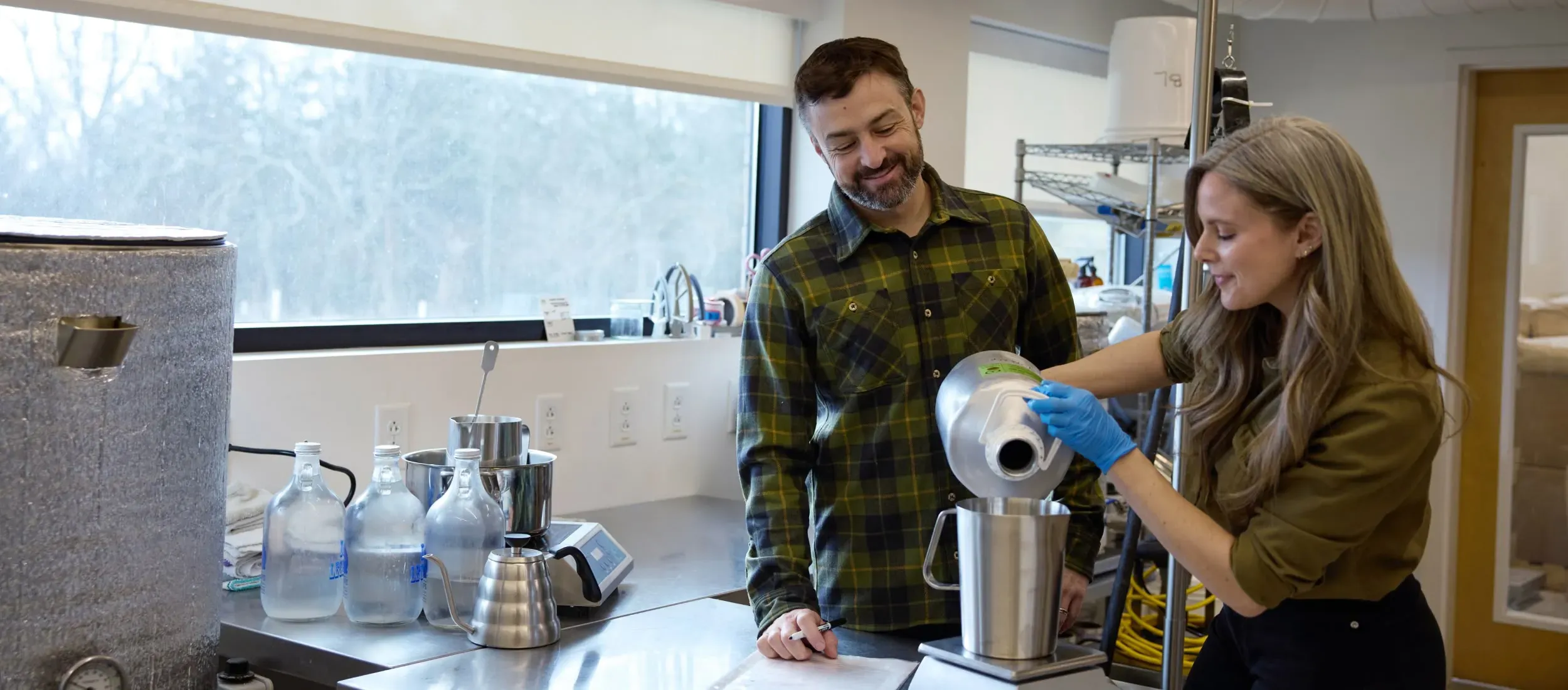
James and Eileen Ray wanted to be part of the sustainable small-farming movement. They left their corporate jobs in New York City in 2012, moving to an old dairy farm outside Nashville to found Little Seed Farm. “Regenerative farming was something we were both super passionate about,” says James. “We wanted to make a difference in the world.” After trying their hands at raising cows, pigs, and ducks, the couple found their calling: creating clean beauty products, including their signature natural deodorant cream and handcrafted goat’s milk soaps, rooted in the same values that brought them to the farm in the first place. Today, with a staff of 18 and a herd of 50 goats, they manage their brand by intentionally selling only in mom-and-pop shops (over 1,000 nationwide) and directly to over 500,000 online customers. “We’ve grown every year since we started,” says James, noting that annual growth generally exceeds 20 percent.

“Gemini and AI Overviews help me with IT or equipment issues. Instead of making a phone call, I upload a photo and it can diagnose it and tell me how to fix it.”
“Google Ads is really effective for reaching people at their point of decision-making,” says James, who averages a 5x return on ad spend. “We’ve always used Google Ads to drive awareness and convert at the end of the funnel. It puts us on a level playing field with bigger companies.” Performance Max campaigns manage ads across all their ad channels; James notes they perform especially well for new and seasonal products. They’ve also discovered Gemini as a tool for troubleshooting IT or equipment issues. “Gemini and AI Overviews are a nice way to quickly answer questions or research problems,” James says. “Instead of making a phone call, I can upload a picture, describe what’s happening, and it can help me fix it.” And they use Gemini to help research product safety or substitutes for ingredients they want to avoid. “Our approach has been to grow slowly and sustainably, so we can maintain our brand ethics,” James says. “Google's been a part of that.”
Products
Firesight Studios
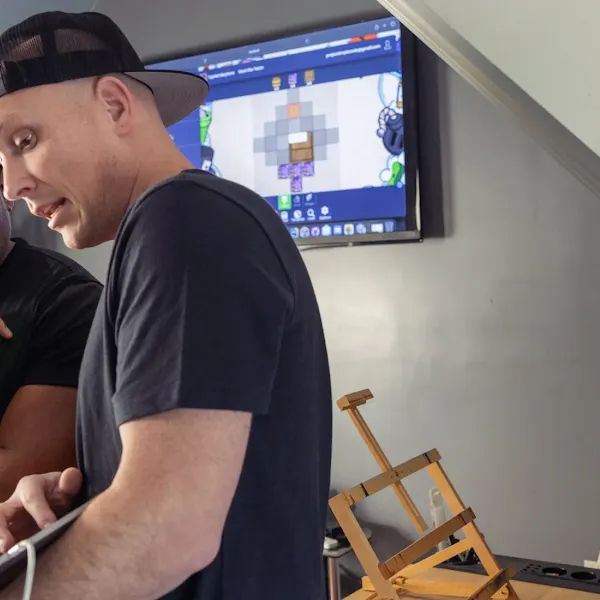
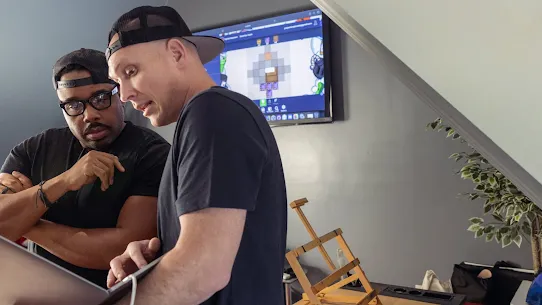
The seeds for Firesight Studios were planted in 2016 when Justin Zimmerman and Julius Hubbard worked together as firefighters in Chattanooga. Both had side businesses and projects: Justin is a programmer and software developer and Julius is an artist. In 2024, the two friends launched Firesight Studios to help local companies with their digital needs. When Julius’ daughters began learning color theory, it sparked a new idea: Palette Splash, a mobile game where players blend colors to advance levels. With the support of their families, the duo worked long nights to get their game off the ground, using Google tools to design, develop, and launch Palette Splash in the Google Play store. To their surprise, the downloads rolled in right away–and are now at 60,000 and counting.
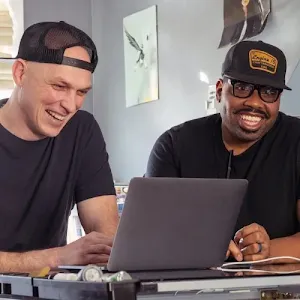
“Deploying Android apps would be a lot more difficult without Google Play and its services, and our company wouldn’t have gained as much visibility.”
Google Play offered Firesight Studios a way to deploy and distribute the game without self-hosting. “The integration is so streamlined–and affordable,” Julius says. Adds Justin, “The security measures and analytics functions Google puts in place are very valuable. With our Google Ads marketing, it’s like a one-stop shop to get it out to the masses.” Gemini’s API ensures that gamers generate family-friendly player names, and Firebase is an important part of their development process. “It provides us with every cloud service available to tackle any task,” says Justin. That ranges from authentication and image storage solutions to tracking game performance. “Palette Splash was just the beginning,” Julius says. They have new games on tap and are sparking creativity and engagement with Level Lab, which allows users to design, share, and play custom levels within games. They’re also working closely with the local tech community and leaders. “It’s a whole new market, to be able to tell blue-collar guys that you can be a first responder and start your own software company, and Google will support it,” says Julius.
Products
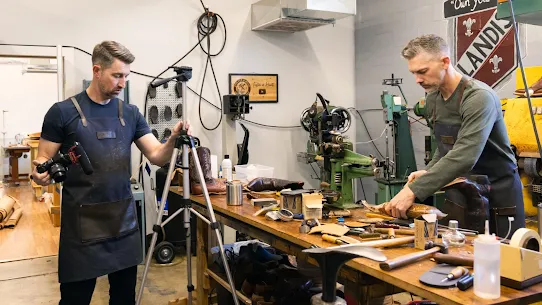
Trenton & Heath
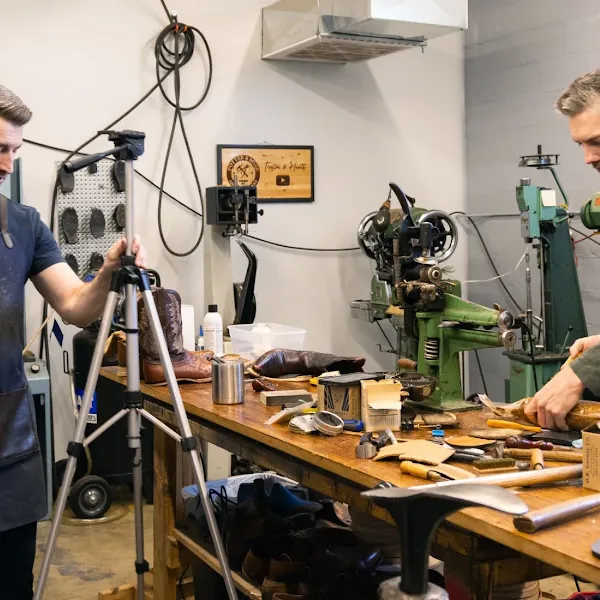
When brothers Trenton and Heath Potter, along with their dad, Norm, turned their love for shoes into shoeshine pickup-and-delivery business Potter & Sons in 2010, YouTube helped them hone their skills. “We used YouTube to watch other shoe shiners and learn from their techniques,” Heath says. In 2014, the brothers bought and renovated a 30-year-old shoe repair shop in suburban Nashville they named Southern Polished. “Our dream was to bring back the lost art of the shoe cobbler,” Trenton says. “We wanted to create an upscale shoe repair shop that focused on selling only the highest-quality products and specialized in refurbishing fine, luxurious shoes.” Five years later, the brothers turned to YouTube once again to broaden their audience. “I thought, why don't we start a YouTube channel where we answer people's questions?’” Trenton says. “I knew that YouTube had a massive audience and allowed you to tell a story.”

“In our first two years, we increased our annual revenue six times what we were making before we started our YouTube channel.”
Trenton and Heath launched the Trenton & Heath YouTube channel in May 2019. “That changed everything,” Trenton says. Soon viewers worldwide were placing online orders through the Potter & Sons mail-in shoe care service, which sells higher-end shoe and leather care products. “Prior to YouTube, our only customers were locals,” says Trenton. “Within our first four years on YouTube, we had grown to over 400,000 subscribers.” Revenue has grown an average of 15 to 20 percent each year, allowing the brothers to hire more employees and roll out a men's sandal brand, Southern Polished. Trenton attributes 85 to 90 percent of their annual revenue growth to their YouTube channel, which sends 200 to 300 viewers each day to the Potter & Sons and Southern Polished websites. “For us, it was all about finding something that made our business unique and sharing it with people,” Trenton says. “When we did that, people were very appreciative, and that helped our business grow.”
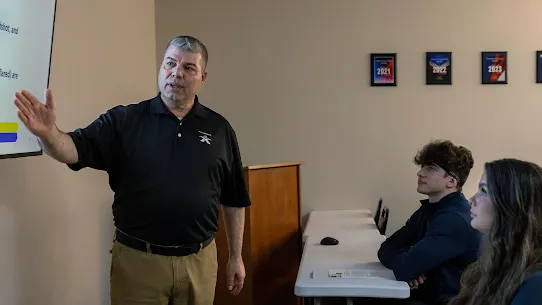
Alliance Training and Testing
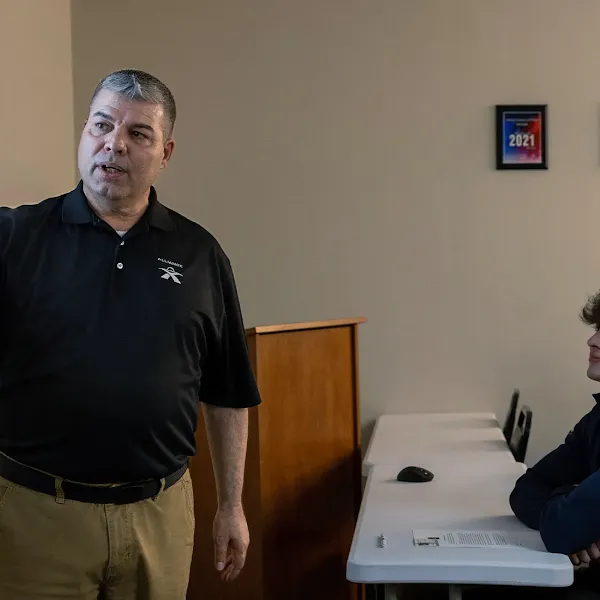
As a decorated Army infantryman, Angel Rodriguez found it was a natural progression to the security field once he returned to civilian life. He was running operations for a small security company when the owners, unhappy with the security guard training available in Nashville, suggested that he start training people himself. In 2012, he opened Alliance Training and Testing to license unarmed security guards, and he has since expanded the business to provide armed license courses and recertification. “It gives me the warm fuzzies whenever I meet someone and know that what I’m doing will help them get a job,” Angel says. The pandemic hit the industry hard, but Angel pivoted to offer the first online Unarmed Security License training course in Tennessee, working for eight months to change laws and gain approval. Business grew 138 percent in 2021, and in 2022 the company trained around 1,500 people. Angel has turned to his Google Business Profile to help that growth along.
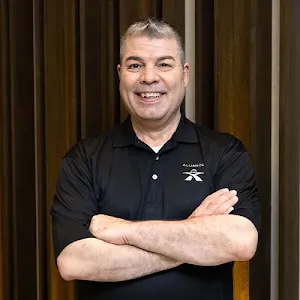
“Google has been my sales force, my IT department, and–most of all–my trusted partner from the very first day I started this business.”
“We created our Business Profile in 2012 when the company was formed,” Angel says, “and it’s equally important to me as my website.” In January 2023 alone, Alliance’s Business Profile was discovered nearly 3,000 times, with about 300 users clicking through to the website. “The products section, in particular, allows a frictionless way to offer my service directly to the customer right from the Business Profile page,” Angel explains. Also a Google Workspace user, Angel is particularly fond of Gmail for its ability to automate customer emails. This year, Alliance expects to double its business as it offers new courses based on new legislation, expands its online library, and starts to train students at client-hosted locations. “To quote Pinky and the Brain, we’re going to do the same thing we do every night,” Angel jokes: “Try to take over the world!”
Products
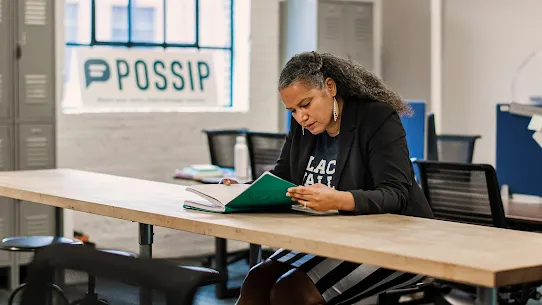
Possip
As an educator and a parent, Shani Dowell knew that communication between schools and families had room to improve. In 2017 she founded Possip, an online platform that texts weekly prompts to families and staff to get feedback. Possip—a blend of “positive” and “gossip”—then organizes the feedback into actionable reports. Equitable access to information is central to Possip’s mission. Texts are sent in over 100 languages and are easy to read and answer. “There's such value in the diversity of voices,” Shani says, “so creating a tool that brings in all those voices is important.” As a participant in the 2020 Google for Startups Accelerator for Women Founders, Shani discovered digital products like Google Analytics, which Possip uses to interpret data and guide them as they tweak their website and ads. And they use Google Translate to engage non-English speakers. Possip has 25 employees serving around 300,000 families in 700 schools from Maine to Hawaii.
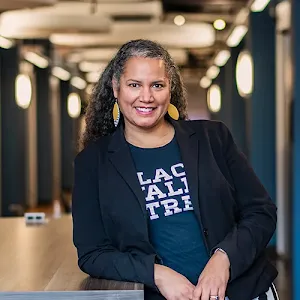
“Google has been part of my growth through the Google for Startups Accelerator for Women Founders, the Black Founders Exchange, and many other places.”
School shutdowns due to COVID-19 made the startup’s future uncertain. But it became clear that more schools than ever needed an efficient way to assess not just educational or tech needs, but also food, housing, and health issues affecting their students’ families. Possip experienced a 6x growth year-over-year (YoY) as more school districts joined the platform to listen and respond to their communities. To process the amount of data they’re receiving, Possip is adding Google Cloud AI to their digital toolbox. They’re also offering more information on their website and blog. “We think about gossip as bad,” says Shani, “but when you get that information to the right people, positive things can happen to improve a community.” With a 90-percent renewal rate, Possip has a lot of positive gossip to spread. And with a recent $100,000 non-dilutive cash investment from the Google for Startups Black Founders Fund, Possip can continue to focus on its long-term vision to be “the place where parents and educators go to strengthen experiences for kids,” adds Shani.

Montgomery County
Data centers are what keep the internet up and running. Our employees at the Montgomery County data center will work to keep Google Search, Gmail, YouTube, and many other Google applications operational, enabling Google to provide fast and reliable services around the clock to millions of people. Learn more about Google data centers.
1To provide a more complete picture of Google’s economic investment, the 2025 U.S. Economic Impact Report has updated its historical investment reporting methodology which previously focused primarily on physical data center construction. However, physical builds represent only the first component of our long-term commitment to our investments which also include applicable server and networking infrastructure capital expenditure. The current year methodology now includes our historical investment in data center construction, server and networking infrastructure.