-
$2.6B of economic activity
In 2025, Google helped provide $2.6 billion of economic activity for tens of thousands of Oklahoma businesses, nonprofits, publishers, creators, and developers
-
237,000 Oklahoma businesses
More than 237,000 Oklahoma businesses used Google’s tools at no cost to receive phone calls, bookings, reviews, requests for directions, or other direct connections to their customers
-
$15Binvestment in Oklahoma
Since the Mayes County, Oklahoma data center was built in 2007, Google has invested more than $15 billion in the state1
Investment methodology now reflects total data center investment (construction, server and networking infrastructure). Learn more. -
$12M+ in philanthropic and social impact funding
Since 2008, Google and Googlers have given more than $12 million in funding (cash grants, social impact funding, employee donations, and gift match) to organizations and nonprofits in Oklahoma
-
9,000+ volunteer hours
Since 2014, through Google.org, Google employees volunteered more than 9,000 hours with nonprofits and schools
-
$4M+ of Ad Grants to nonprofits
In 2025 alone, Google.org provided more than $4 million worth of donated search ads to Oklahoma nonprofits through the Google Ad Grants program


$2.6B of economic activity
In 2025, Google helped provide $2.6 billion of economic activity for tens of thousands of Oklahoma businesses, nonprofits, publishers, creators, and developers
237,000 Oklahoma businesses
More than 237,000 Oklahoma businesses used Google’s tools at no cost to receive phone calls, bookings, reviews, requests for directions, or other direct connections to their customers
$15B investment in Oklahoma
Since the Mayes County, Oklahoma data center was built in 2007, Google has invested more than $15 billion in the state1
Investment methodology now reflects total data center investment (construction, server and networking infrastructure). Learn more.
$12M+ in philanthropic and social impact funding
Since 2008, Google and Googlers have given more than $12 million in funding (cash grants, social impact funding, employee donations, and gift match) to organizations and nonprofits in Oklahoma
9,000+ volunteer hours
Since 2014, through Google.org, Google employees volunteered more than 9,000 hours with nonprofits and schools
$4M+ of Ad Grants to nonprofits
In 2025 alone, Google.org provided more than $4 million worth of donated search ads to Oklahoma nonprofits through the Google Ad Grants program
Featured businesses
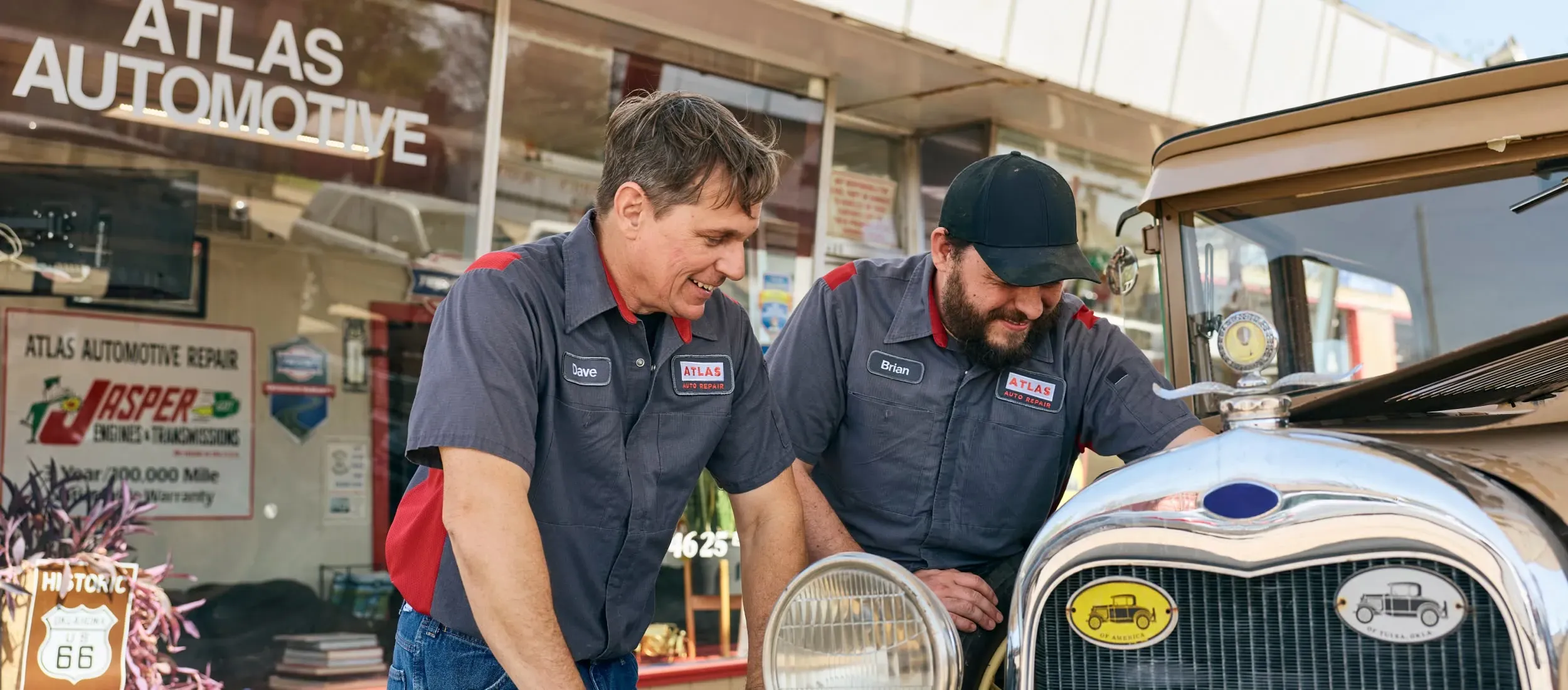
Atlas Automotive Repair
As a teenager, Brian Newham took his broken-down ’93 Oldsmobile to mechanic Dave Smith, who charged him just $200 instead of the thousands he expected. That refreshing interaction sparked a mentorship. Realizing that customers routinely pay for repairs they don’t understand, Brian resolved to do things differently, and in 2017 he and Dave opened Atlas Automotive Repair on Tulsa’s historic Route 66. “We educate every customer. Not to upsell, but because people deserve to understand what went wrong with their vehicle, what we’re fixing, and why,” Brian says. They’ve built a loyal following this way, booking appointments weeks in advance through word of mouth and their 4.9-star Google Business Profile.
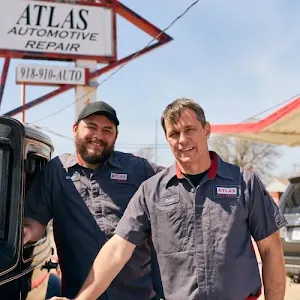
“With Gemini, we’re unlocking new ways of helping our customers and new ways of being able to fix cars.”
To build trust, Atlas treats every diagnosis as a story, providing plain-language reports that empower customers to make informed decisions. Before, it would take Brian an hour to prepare each report; now, he uses Gemini to translate technical notes into jargon-free summaries in 15 minutes. The tool also helps him edit background clutter, or a technician covered in grease, out of inspection photos to eliminate distractions. Mechanics use Gemini to sift through dense original equipment manufacturer documents and to research solutions. For example, it helped them find a simple fix for an F-150’s AC that saved his customer thousands of dollars. Most recently, Brian used Firebase to build a custom booking app in two weekends, with Gemini helping him through the process, saving the shop $500 a month. “I'm a mechanic in Oklahoma, not a coder, but I made an impressive-looking tool that’s specifically designed for our shop,” he says. Gemini in Gmail supports the team in summarizing years of messages and context on a vehicle’s repair history. For Brian, this means more time on the shop floor. “I want to be working on cars, not stuck at a desk,” he says. “That’s what I’m really passionate about.”
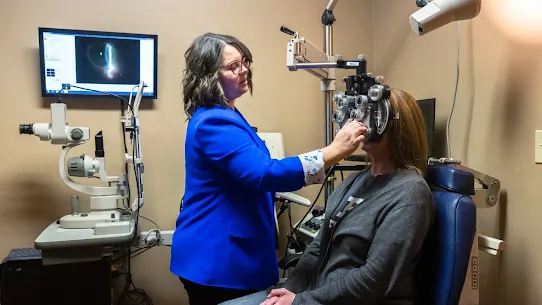
Family Vision Care of Ponca City
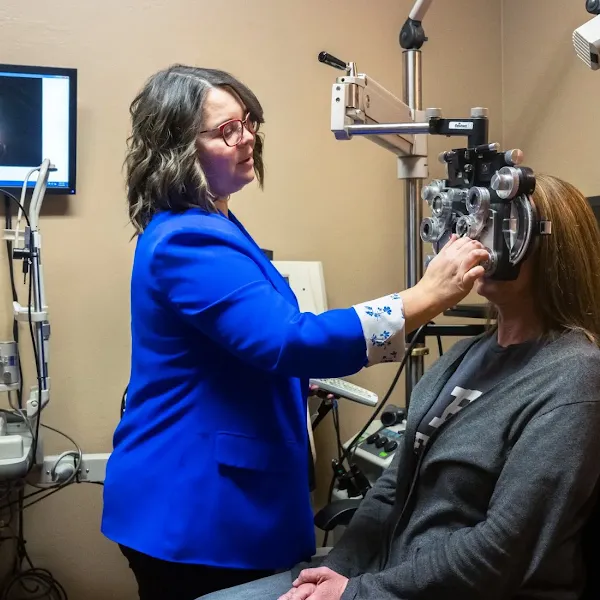
Optometry is one of the few areas of healthcare that still has a lot of independent practices, Dr. Kelly Campbell points out. She knew from the start that she wanted to own a private practice. Dr. Campbell joined Family Vision Care of Ponca City in 2011; six years later she purchased the practice from the founder, Dr. William Stuever, who still works with her. “That was always the goal–to give my partner a retirement plan and provide a retirement plan for myself in the future,” she explains. Today, the two optometrists run Family Vision Care of Ponca City with their nine employees. They serve around 6,000 patients per year with comprehensive eye exams, cutting-edge diagnostic tools, and a full optical lab providing same-day service.
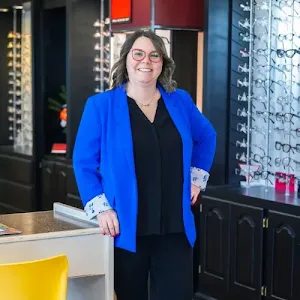
“Gemini in Gmail can help me translate my doctor-speak into patient-speak.”
Dr. Campbell modernized the practice when she took over, including text message communication with patients and regular updates on their Google Business Profile. “We live in a world now where, if your webpage isn’t right and your Business Profile isn’t right, then I may not come to your business,” she says. “It’s so easy for me to update my Business Profile and be able to provide information about the practice, and it’s nice to see how many people are going to the website.” Dr. Campbell also uses Google Workspace to stay organized and has begun experimenting with Gemini in Gmail. “We have a variety of patients we’re trying to communicate with, and clinical terminology uses a lot of big, scientific words,” she says. “Gemini in Gmail can help me translate my doctor-speak into patient-speak.” Family Vision Care of Ponca City is now growing at a rate of 12 percent year over year, and with that success they’ve become involved with the Ponca City Chamber of Commerce, Art Center, Lions Club, and several community nonprofits. She adds, “There's a lot of ways to be involved in this community, and it's been a great way to support those around us.”
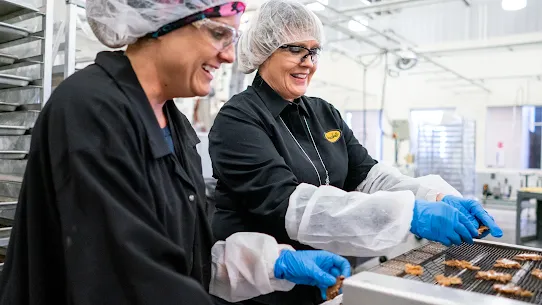
Bedré Fine Chocolate
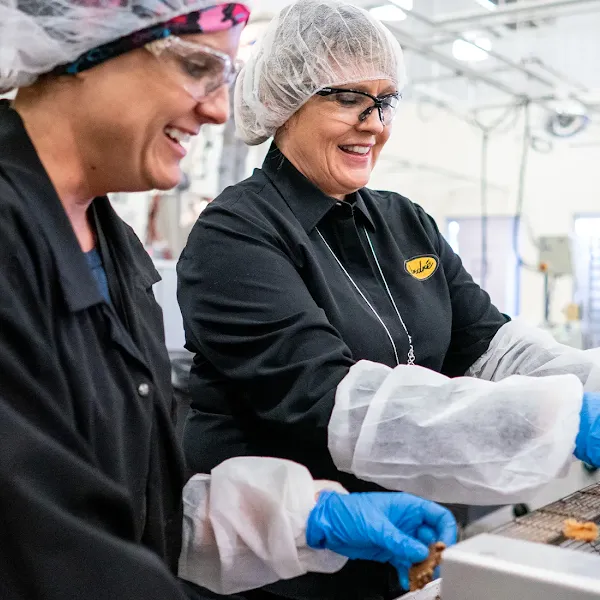
When the Chickasaw Nation purchased Bedré Fine Chocolates in 2000, they didn’t just diversify their portfolio—they built on the traditional connection of Indigenous peoples to the cacao bean. Based in Davis, Oklahoma, Bedré crafts luxury chocolates and is the only tribally-run chocolatier in the U.S. “That’s the root of Bedré’s identity,” says General Manager Kay Colbert. “Everything we do supports the Chickasaw people, traditions, and services.” Bedré built a new facility in 2012, with expanded retail space and glass wall, so visitors could watch production. A major website redesign in 2015 grew their e-commerce, and they used Google Ads to garner wholesale and retail clients. Creative Advertising Developer Gustavo Ocana directs the digital group’s efforts to boost engagement by tweaking visuals and promotions based on insights from Google Analytics. With the switch to fair trade sources in 2018, Bedré can now trace their chocolate from farm to factory—and give farmers a fair wage and bonuses. Their raw chocolate intake went from 90,000 pounds in 2015 to cocoa contracts for a combined total of nearly 500,000 pounds in 2019.
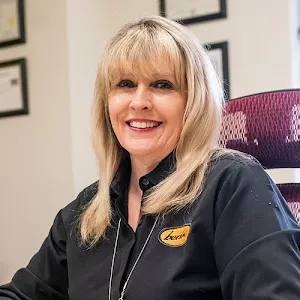
“Google’s digital tools are really valuable—they help us make better decisions, and they’re how we build our brand and connect with our customers.”
Just before the chocolate-centric Easter and Mother’s Day holidays, COVID-19 forced Bedré to close their retail store. Kay and Gustavo upped their digital advertising to concentrate on web sales. “We focused on our online gifting to try to help people meet holiday needs during the shutdown,” says Kay. And they ran Google Ads campaigns with offers normally reserved for the holiday season “to give people a break on costs.” Their efforts helped offset the retail store’s slowdown: Bedré saw a 65-percent increase in online sales and a record number of new wholesale accounts. Bedré is planning new products for 2021, but their commitment to customers won’t change. “In this day and age when everything is digital,” Gustavo says, “Bedré strives to have unparalleled customer service. Our website is our connection to our customers, and there is always a real person on the other end.”
Products
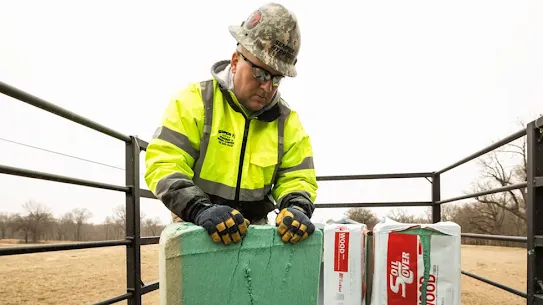
Semper Fi Hydroseed & Erosion Control
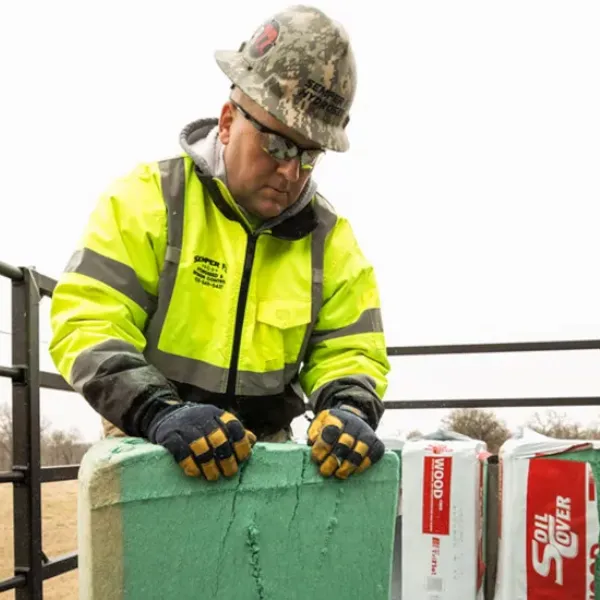
When Clint Bates left the Marine Corps in 1993, he became a police officer and mowed lawns on the side. After realizing his side gig could become a real business, Clint left his job and started his own lawn company. As the company grew, he began experimenting with hydroseeding, the process of combining seed and mulch to fertilize a lawn. Within three years, Clint established Semper Fi Hydroseed & Erosion Control. “We are a veteran- owned and -operated company,” said Clint. “Our goal is to have all veteran employees working for us.” Staying on that theme — and to stand out — Clint purchased all military-style trucks and equipment. Knowing it’s just as important to stand out online, he also hired Andrew Olson, a military veteran turned marketing specialist.
“Google is the No. 1 internet tool we use.”
Andrew uses a number of Google tools to help bolster the company’s digital marketing efforts. “We’ve been working on reorganizing the website, bringing it up to standard, and employing Google Ads on the marketing side.” Those ads have helped Semper Fi Hydroseed & Erosion Control get in front of people searching for hydroseeding or similar services in the Bartlesville, Oklahoma area. The team also uses Google Analytics to monitor and optimize the company’s website and search campaigns. “When we first started, the budget was fairly small, but I was pretty pleased with the response rates we saw,” Andrew said. Clint and his team also use G Suite apps to communicate and collaborate more efficiently. “Google is the No. 1 internet tool we use,” said Clint.
Semper Fi Hydroseed & Erosion Control now operates in five states and plans to continue expanding its presence throughout the Midwest. “In order to maximize our growth, we need to consider not just doubling but tripling our Google Ads budget,” said Andrew. The company’s success has allowed Clint to donate to charities and causes that are important to him, including hospitals and a nonprofit organization that fights against veteran suicide. In the next five years, Clint hopes to recruit more veteran employees and work with more commercial clients — all with the help of Google. “Google is going to be the future of our business,” said Clint.
Products
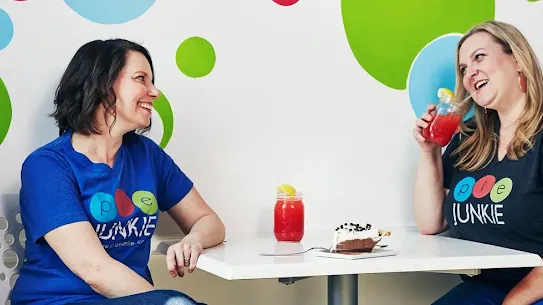
Pie Junkie
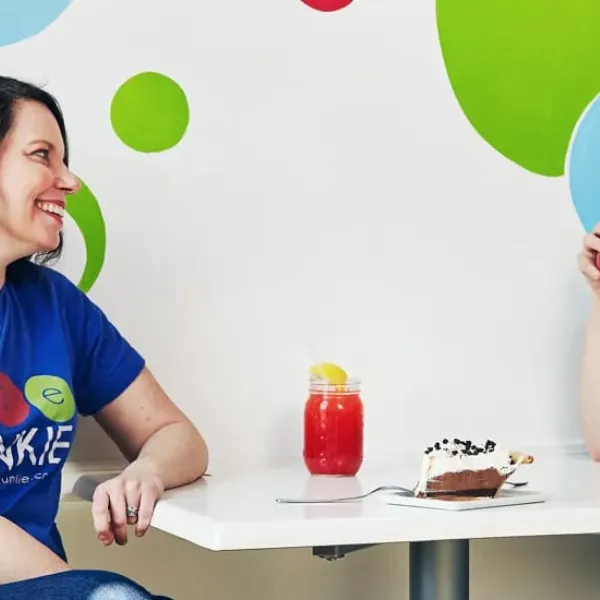
For Oklahoma moms Darcy Schein and Leslie Coale-Mossman, business began with one homemade pie at a time. "Leslie and I started out just spending time cooking for our kids," Darcy says. "We quickly figured out that we had a lot of friends who wanted help in the kitchen. So in 2010, we started a small catering business, providing one pie a week to a local startup restaurant." Customers wanted to know, “Who made the pie?” That initial slice of exposure created enough buzz for the women to open a shop in 2013 in Oklahoma City's Plaza District. "Pie Junkie is a labor of love," Darcy says. "We make quiche in the morning and a number of sweet options by the slice. Folks can come in and enjoy a slice of pie and a cup of coffee. Or they can order a pie for a special occasion. And we do everything in our tiny 1,000-square-foot shop."
“When customers leave us a good review on Google, we know it makes an impact.”
Since their humble beginnings baking out of a church kitchen, Pie Junkie has maintained a strong web and social media presence. They launched their business using Gmail to take orders, from grandma-inspired apple crumble pies to modern delights such as macadamia key lime pie. And today, with a physical storefront, their Google My Business listing works with Google Search and Maps to drive customers into their shop. It includes photos, store hours, directions, a link to their website, and Google reviews from satisfied pie lovers. "We know from customers that's how they find us," Darcy says. “And fortunately for us, there is an easy map that will guide them here because we are a tiny shop located in a tricky, hard-to-find spot.”
Business for Pie Junkie has increased steadily, garnering press mentions from national publications. Darcy and Leslie give back to their community through their Pie-It-Forward program, where once a month they select a local charity to receive a portion of their sales, along with gift certificates. "We live in a wonderful community, where business owners support one another," Darcy says. "We're really grateful to be a part of it."
Products
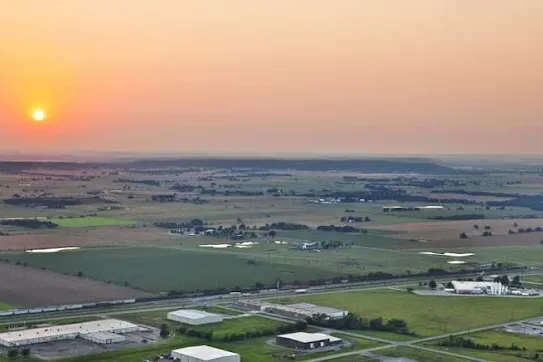
Mayes County
Data centers are what keep the internet up and running. Our employees at the Mayes County data center work to keep Google Search, Gmail, YouTube, and many other Google applications operational, enabling Google to provide fast and reliable services around the clock to millions of people. Learn more about Google data centers.
1To provide a more complete picture of Google’s economic investment, the 2025 U.S. Economic Impact Report has updated its historical investment reporting methodology which previously focused primarily on physical data center construction. However, physical builds represent only the first component of our long-term commitment to our investments which also include applicable server and networking infrastructure capital expenditure. The current year methodology now includes our historical investment in data center construction, server and networking infrastructure.