-
$223B of economic activity
In 2025, Google helped provide $223 billion of economic activity for hundreds of thousands of California businesses, nonprofits, publishers, creators, and developers
-
2.2M California businesses
More than 2.2 million California businesses used Google’s tools at no cost to receive phone calls, bookings, reviews, requests for directions, or other direct connections to their customers
-
$237M+ of Ad Grants to nonprofits
In 2025 alone, Google.org provided more than $237 million worth of donated search ads to California nonprofits through the Google Ad Grants program
-
$1.4B+ in philanthropic and social impact funding
Since 2005, Google and Googlers have given more than $1.4 billion in funding (cash grants, social impact funding, employee donations, and gift match) to organizations and nonprofits in California
-
1.5M+ volunteer hours
Since 2011, through Google.org, Google employees volunteered more than 1.5 million hours with nonprofits and schools


$223B of economic activity
In 2025, Google helped provide $223 billion of economic activity for hundreds of thousands of California businesses, nonprofits, publishers, creators, and developers
2.2M California businesses
More than 2.2 million California businesses used Google’s tools at no cost to receive phone calls, bookings, reviews, requests for directions, or other direct connections to their customers
$237M+ of Ad Grants to nonprofits
In 2025 alone, Google.org provided more than $237 million worth of donated search ads to California nonprofits through the Google Ad Grants program
$1.4B+ in philanthropic and social impact funding
Since 2005, Google and Googlers have given more than $1.4 billion in funding (cash grants, social impact funding, employee donations, and gift match) to organizations and nonprofits in California
1.5M+ volunteer hours
Since 2011, through Google.org, Google employees volunteered more than 1.5 million hours with nonprofits and schools
Featured businesses
Henry’s House of Coffee
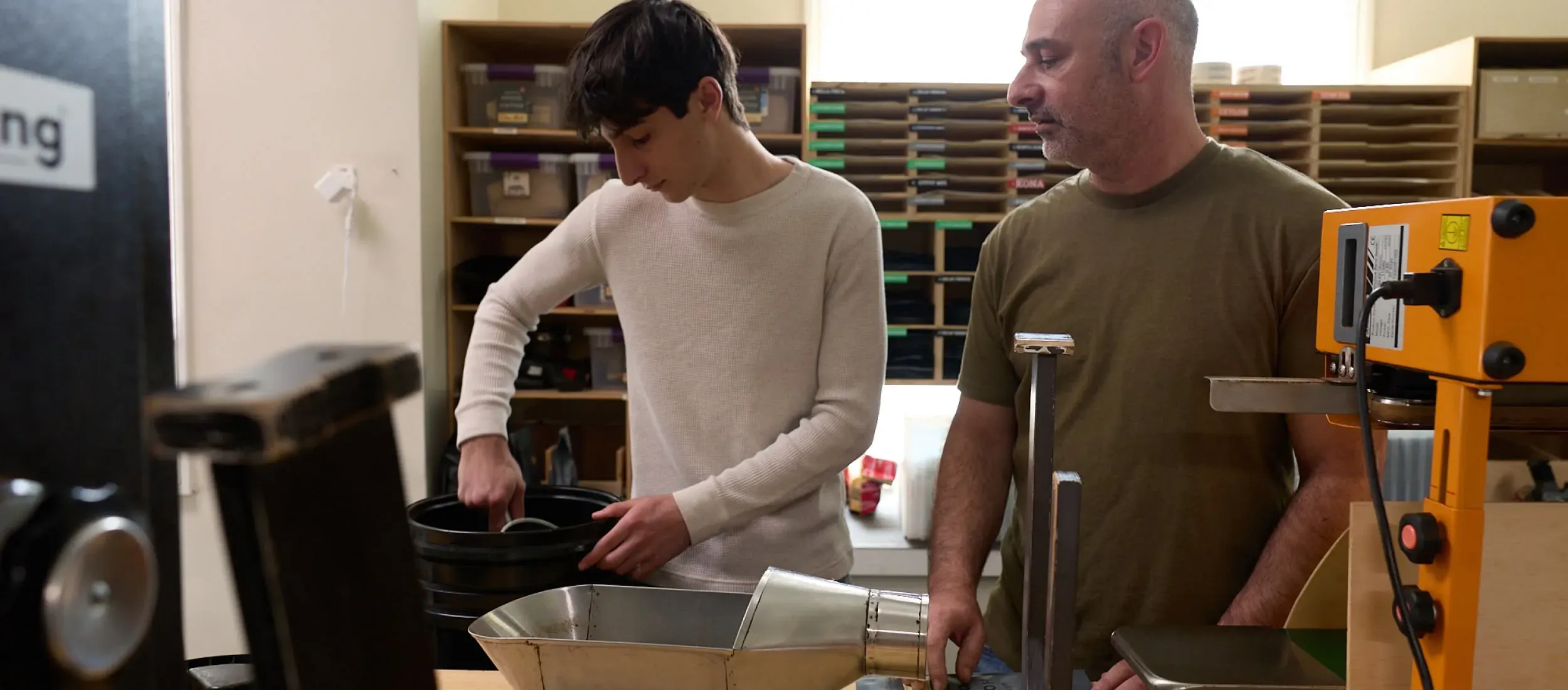
Hrag Kalebjian didn’t set out to join the family business. He’d grown up with Henry’s House of Coffee, a roastery and coffee shop named for his father, who was a second-generation roaster himself. Hrag went into corporate finance after college, but when his father considered retiring in 2013, Hrag decided to make a career change. “I saw a big opportunity in the online space, since my Dad didn’t have a website,” he says. “I’ve been here ever since and I love every single day.” He added e-commerce and modernized the shop, balancing efficiency with respect for Henry’s 30 years of experience. They now offer nationwide shipping, and subscriptions account for 25 percent of online sales. Known for high-quality roasts and Armenian coffee, the shop is a fixture in San Francisco’s Sunset District. “My business is all about relationships,” Hrag says. “Coffee is the medium for us to communicate.”
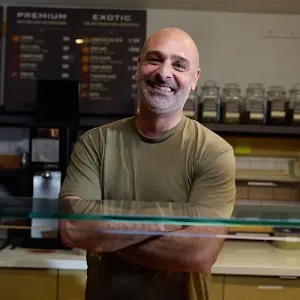
“I used Gemini Notebook to create an infographic on how to make Armenian coffee by uploading the old PDF and my font and color guidelines. It came out perfectly!”
Hrag used Gemini to help him write the code to create a daily sales forecaster. If he ran into issues, he would give Gemini a screenshot and get a suggestion for how to fix them. “It only took about an hour to set up and I get the report every morning,” he says. He also uses Gemini to help synthesize coffee-related news and write the “Sunday Pour,” a weekly newsletter that gets “an amazing response.” To revamp an instruction card for their shop’s Armenian coffee kit, Hrag put the old 15-step PDF into Gemini Notebook. “After maybe 20 minutes of me uploading and talking to it, I had a card that was ready to print,” he says. Gemini Notebook also helps him build slides with fun, coffee-themed visual metaphors to clearly explain the finances at family shareholder meetings, a process that now takes five minutes instead of several hours. Next on the agenda: producing coffee advent calendars that Hrag designed using Nano Banana. And, waiting for one of his kids to become a fourth-generation coffee roaster.
Products
EdVisorly
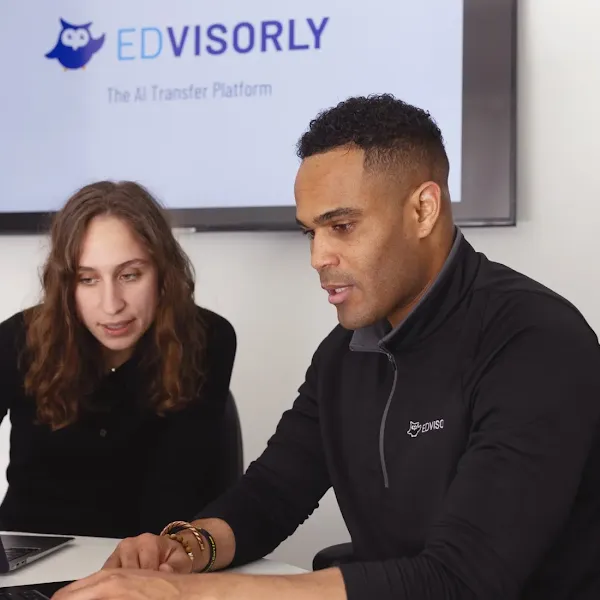
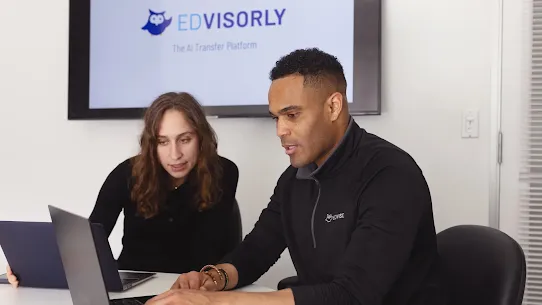
In 2019, U.S. Air Force veteran Manny Smith and two partners were inspired to create EdVisorly. It’s a mobile app that makes it easier for those community college students who want to earn a bachelor’s degree to transfer to four-year universities. “I realized I could combine my technology product manager experience from the military with my passion to help students,” says Manny, EdVisorly’s CEO. With the app, students can explore schools, connect with admissions teams, and apply to multiple universities with just a few clicks. EdVisorly’s proprietary EddyAI technology also decreases the time it takes admissions teams to process transcripts and evaluate transfer credits. “We want to build a bridge from community college to universities,” says Manny, “and help universities better recruit transfer students at scale.”
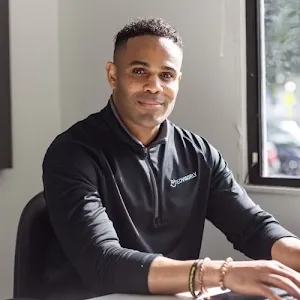
“We ask the team, ‘How can you optimize the work you're doing with AI so you can spend more time with each other and our customers?’”
As part of Google for Startups in 2024, EdVisorly refined their business model and technology. “We made more progress in two months than I made in the first 18 months of building EdVisorly,” Manny says. The 25-person team uses BigQuery, Google’s data analytics platform, to help decide how to best help students navigate steps like transferring their credits. “We make so many product decisions because of BigQuery,” says Lizzie Allison, EdVisorly's chief innovation officer, “starting from what transcripts we can automate while ensuring data accuracy.” The team streamlines business workflows with Gemini, using it to write emails, summarize documents, and create presentations. Lizzie says, “We ask the team, ‘How can you optimize your work with AI so you can spend more time with our clients?’” Adds Manny, “AI has the capacity across everything you do in your business to improve an integration or a function. Every business should consider how to use it.”
Products
Benchmark Labs
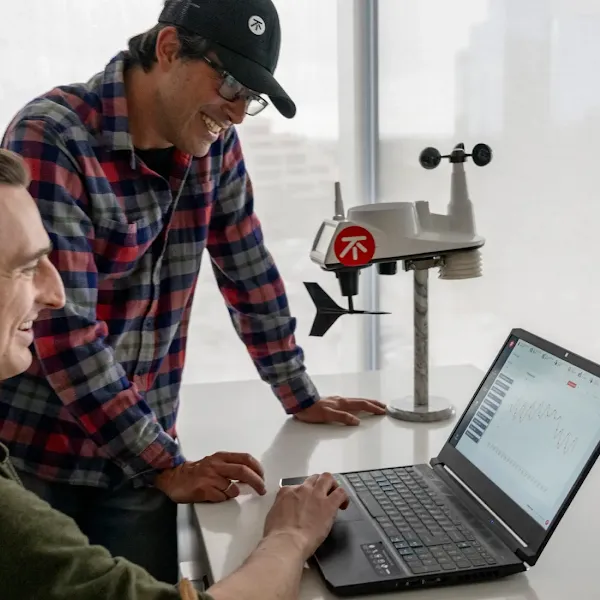
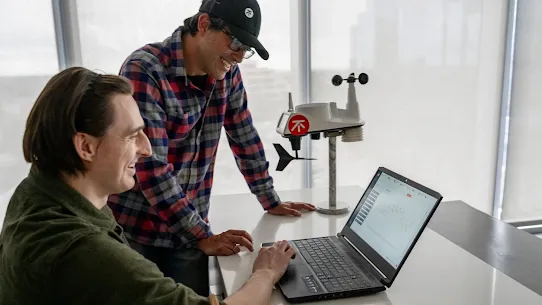
People who work in agriculture need accurate forecasts, says Carlos Gaitan, a 2023 Google for Startups Founders Funds recipient. He’s the CEO of Benchmark Labs, co-founded by Carlos, Ulrik Soderstrom, and the late Chris Lund in 2019 to solve a problem: National Weather Service forecasts cover wide regions. “Farm managers aren’t able to accurately plan their resource needs, increasing operating costs,” Carlos explains. That’s why Benchmark Labs’ AI-based technology provides forecasts tailored to a farm’s specific location, making them up to 85 percent more accurate. “We’re solving a real problem for growers all over the world, allowing them to conserve water, energy, and fertilizers, helping the environment and creating better working conditions,” he says. Customers are increasing yields by 50 to 100 percent, and some have reduced water needs by 10 percent or more.

“Gemini is almost like having a virtual assistant. It helps us synthesize information in new ways.”
Benchmark Labs has used Google Cloud since their founding in 2019 to develop, test, and validate machine learning models. It’s their “secret sauce,” Carlos notes. “We can expand and contract our cloud usage based on data requirements. It’s appealing for a startup because we can control our cloud computing costs.” The team collaborates with Google Workspace tools like Google Meet and Docs, and Carlos uses Gemini to find and synthesize information quickly: “It produced a list of the top 200 wineries in California, with contacts, in seconds. We’re planning a Gemini-enabled chatbot for our customer support team.” Benchmark Labs partners with preserve managers from the Nature Conservancy to help prevent forest fires, and will soon be serving forecasts to additional preserves. Since delivering their first prototypes in 2020, revenue has doubled every year. “Google is helping us scale,” Carlos says. “We’re helping smaller farmers get precision tools that could mean the difference between staying in business or not.”
California Electronics
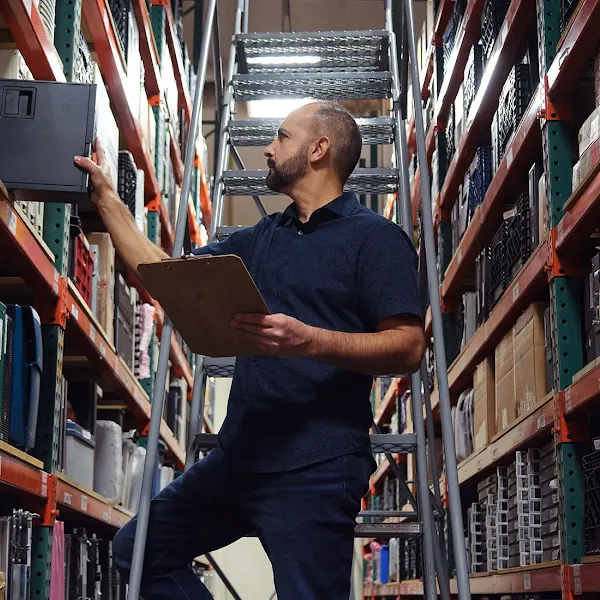
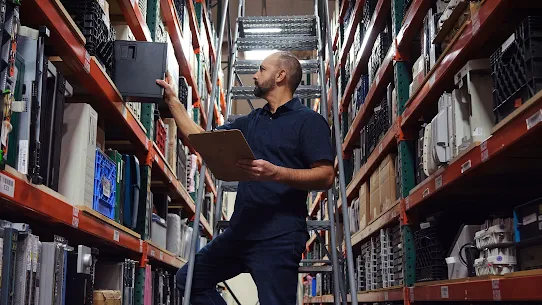
Growing up the youngest of 11 kids, Octavio DeLaTorre learned to repair and reuse items at an early age. “I was fascinated with electronics and fixing things, even as a child,” he recalls. Octavio grew his love for electronics into a career. In 2021, he and his wife, Erica DeLaTorre, purchased California Electronics, where he had worked for many years. Originally a consignment operation that sold refurbished business industrial electronics like computers, they’ve since expanded the business to offer eco-ethical recycling. Now, they help companies securely dispose of end-of-life electronics, such as IT assets and medical and lab equipment. “We want to keep the e-waste that is killing the environment out of landfills,” Octavio says. “Google tools have helped us market the business and promote recycling.”
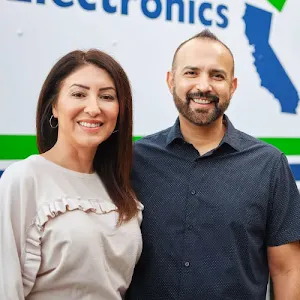
“What's really been a game changer is the refining of Google Analytics and knowing where to put keyword Ads based on the data.”
Google Ads help them bring in B2B customers seeking large-scale recycling and data destruction services, compliant with environmental laws and privacy standards. “We are focused on property managers, hospitals, and data centers,” Octavio notes. “Google Ads are essential to attract those industries. Google Analytics helps us identify what type of business we want to drive here and lets us analyze the data to get the most out of every click to our site.” Google Workspace tools help them run their growing business, which employs 20+ people. “Our new hires already know how to use Google Docs, Sheets, and Calendar,” Octavio says. “Everyone has access via Google Drive. We have real-time documents that we can change on the fly.” They want to educate the public about eco-friendly recycling, offering free recycling pickup events at business centers during Earth Month. “As a society, we have so much e-waste,” Octavio says. “We want to be the trusted partner to help businesses recycle properly and protect the environment.”
Products
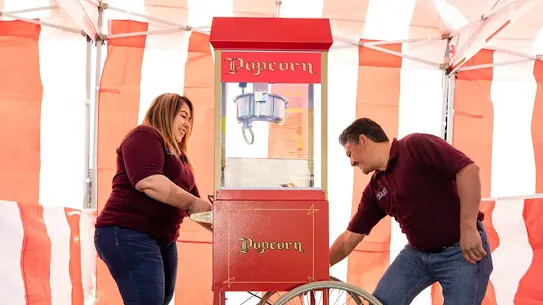
Peninsula Party Rentals
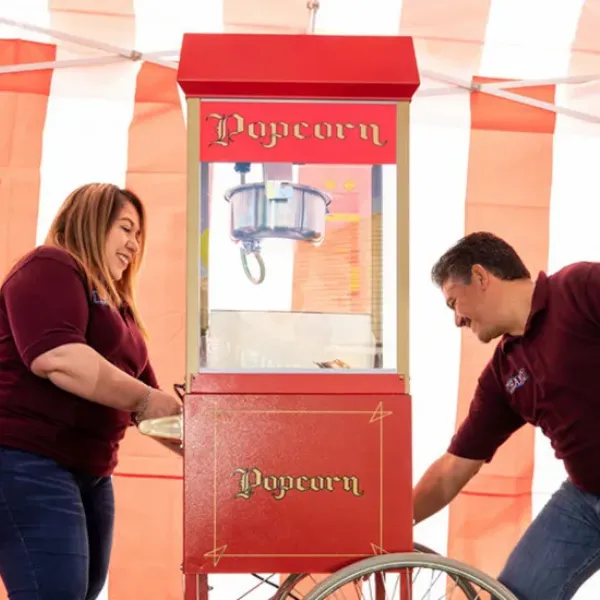
Husband-and-wife duo Feliciano “Chano” Zavala and Ines Zavala worked together at a San Francisco party rental company for 10 years before having twins altered the course of their careers. Wanting to provide for their growing family, the Zavalas were determined to start their own business, so, in 2005 they used their life savings to found Peninsula Party Rentals. The couple rented tables and chairs out of their garage for three years and steadily grew until they were able to move to a more commercial location. But when the economic recession hit in 2008, Chano knew that location alone would not be enough — if they wanted to stay in business, they needed to get online. “I had a meeting with my wife and said, ‘You know what, we can’t let this happen. This is our business, our livelihood,’” said Chano. “So we created a website.”
With its site, Peninsula Party Rentals was able to keep its business going during those uncertain times. This encouraged the Zavalas to explore running Google Ads, a cost-efficient alternative to traditional advertising. “We slowly started figuring out that it was bringing us more money than newspapers and the Yellow Pages,” said Chano. “The return on investment was a lot bigger.” Today, 100% of the company’s marketing budget goes toward digital. The Zavalas also use free tools like Google My Business to provide potential clients with the most up-to-date information about their business on Google Search and Maps. “Clients can now have all the information at their fingertips, and if they want to come to our site and place an order or contact the company, it’s just right there,” said Chano.
“We’re growing at about a 25% increase per year in sales. And Google is making it happen.”
Peninsula Party Rentals currently employs 12 people and serves an average of 300 customers per month. Since advertising with Google, sales have increased 25% year over year. “Google Ads is bringing in enough clients to max our inventory capacity,” said Chano. Committed to paying their success forward, the Zavalas offer discounts to schools and nonprofit organizations and sponsor youth baseball teams all over the Bay Area. The Zavalas soon hope to open more Peninsula Party Rentals locations across northern California. They’ve achieved their goal of providing for their family and a whole lot more. “We’ve been growing at a very steady pace,” said Chano. “Within five years, we’ll probably be in a position where we can either get investors or have our own locations in different cities.”
Products

Mountain View
Los Angeles
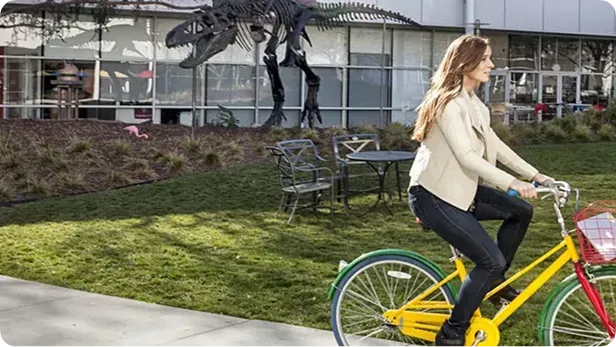
Our Los Angeles teams represent one of Google's largest engineering presences outside of Mountain View. LA-based computer scientists, product managers, and engineers have worked on major Google products, including Android, ChromeOS, YouTube, Ads, VR, Apps, Machine Intelligence, and Photos, to name a few.
San Francisco
Sunnyvale
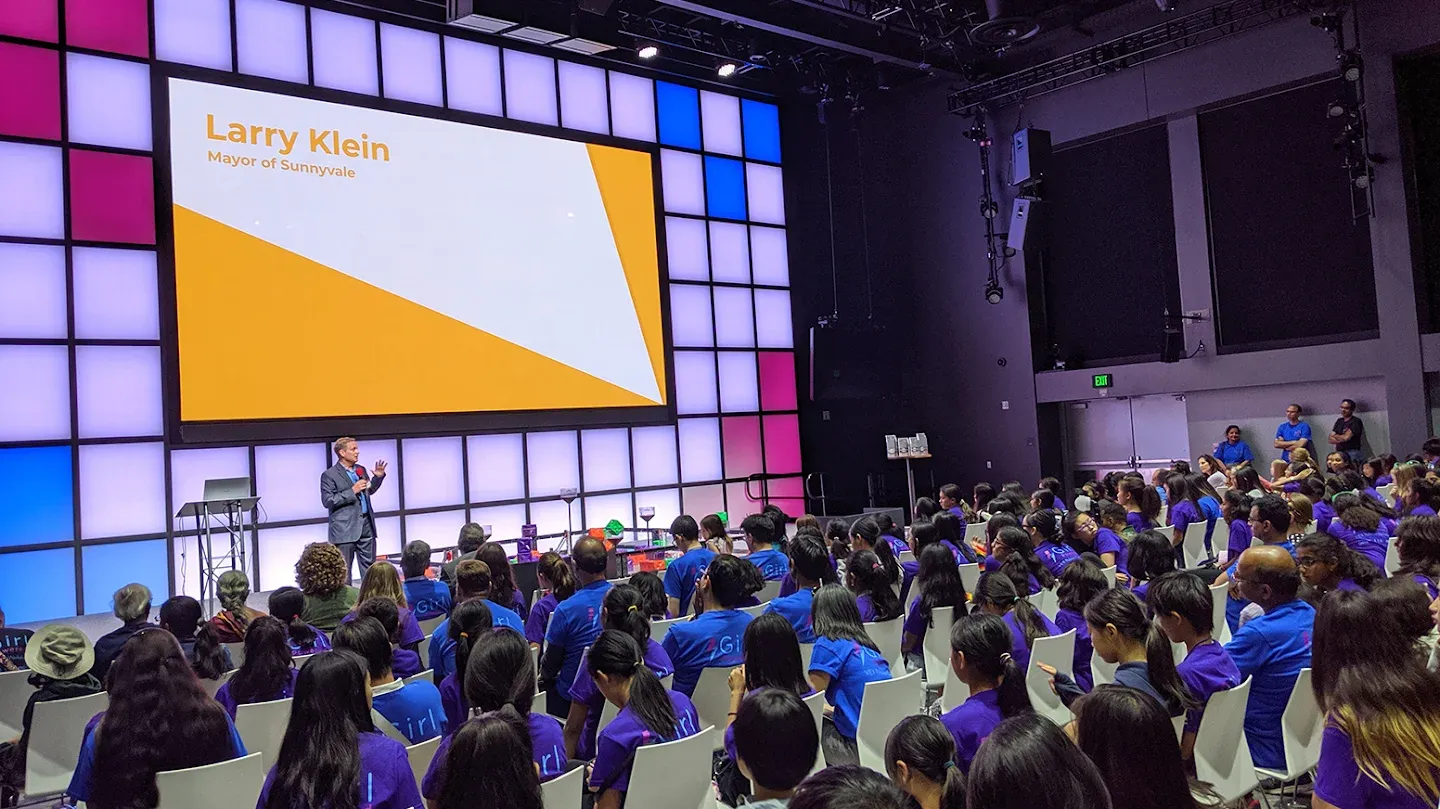
In the heart of the original Silicon Valley, innovation is happening everywhere – from our Cloud team developing exciting new products and services, to moving into our latest office spaces which include interconnected building projects, the creation of green spaces connecting campuses with the community, and the creative restoration of local habitats.
Irvine
Tech employees in Irvine have contributed to major products at Google including Google Ads, Google Analytics, Google Fiber, Google Books, and Google Cloud, to name a few, and work alongside business colleagues who collaborate with external partners to drive forward mutual initiatives.
San Bruno

San Diego
San Diego-based engineers, product managers, and computer scientists have worked on major products at Google – including Assistant, Android, Pixel, Fitbit, and Cloud, to name a few. In San Diego, our hardware and software engineers work alongside program managers, sales, staffing, and finance employees alike to provide quality products and services for our users.