-
$2.6Bof economic activity
In 2025, Google helped provide $2.6 billion of economic activity for tens of thousands of Alabama businesses, nonprofits, publishers, creators, and developers
-
282,000 Alabama businesses
More than 282,000 Alabama businesses used Google’s tools at no cost to receive phone calls, bookings, reviews, requests for directions, or other direct connections to their customers
-
$2B investment in Alabama
Since the Jackson County, Alabama data center was built in 2018, Google has invested more than $2 billion in the state1
Investment methodology now reflects total data center investment (construction, server and networking infrastructure). Learn more. -
$28M+ in philanthropic and social impact funding
Since 2009, Google and Googlers have given more than $28 million in funding (cash grants, social impact funding, employee donations, and gift match) to organizations and nonprofits in Alabama
-
6,000+ volunteer hours
Since 2016, through Google.org, Google employees volunteered more than 6,000 hours with nonprofits and schools
-
$3M+ of Ad Grants to nonprofits
In 2025 alone, Google.org provided more than $3 million worth of donated search ads to Alabama nonprofits through the Google Ad Grants program


$2.6B of economic activity
In 2025, Google helped provide $2.6 billion of economic activity for tens of thousands of Alabama businesses, nonprofits, publishers, creators, and developers
282,000 Alabama businesses
More than 282,000 Alabama businesses used Google’s tools at no cost to receive phone calls, bookings, reviews, requests for directions, or other direct connections to their customers
$2B investment in Alabama
Since the Jackson County, Alabama data center was built in 2018, Google has invested more than $2 billion in the state1
Investment methodology now reflects total data center investment (construction, server and networking infrastructure). Learn more.
$28M+ in philanthropic and social impact funding
Since 2009, Google and Googlers have given more than $28 million in funding (cash grants, social impact funding, employee donations, and gift match) to organizations and nonprofits in Alabama
6,000+ volunteer hours
Since 2016, through Google.org, Google employees volunteered more than 6,000 hours with nonprofits and schools
$3M+ of Ad Grants to nonprofits
In 2025 alone, Google.org provided more than $3 million worth of donated search ads to Alabama nonprofits through the Google Ad Grants program
Featured businesses
IMPACT Roofing
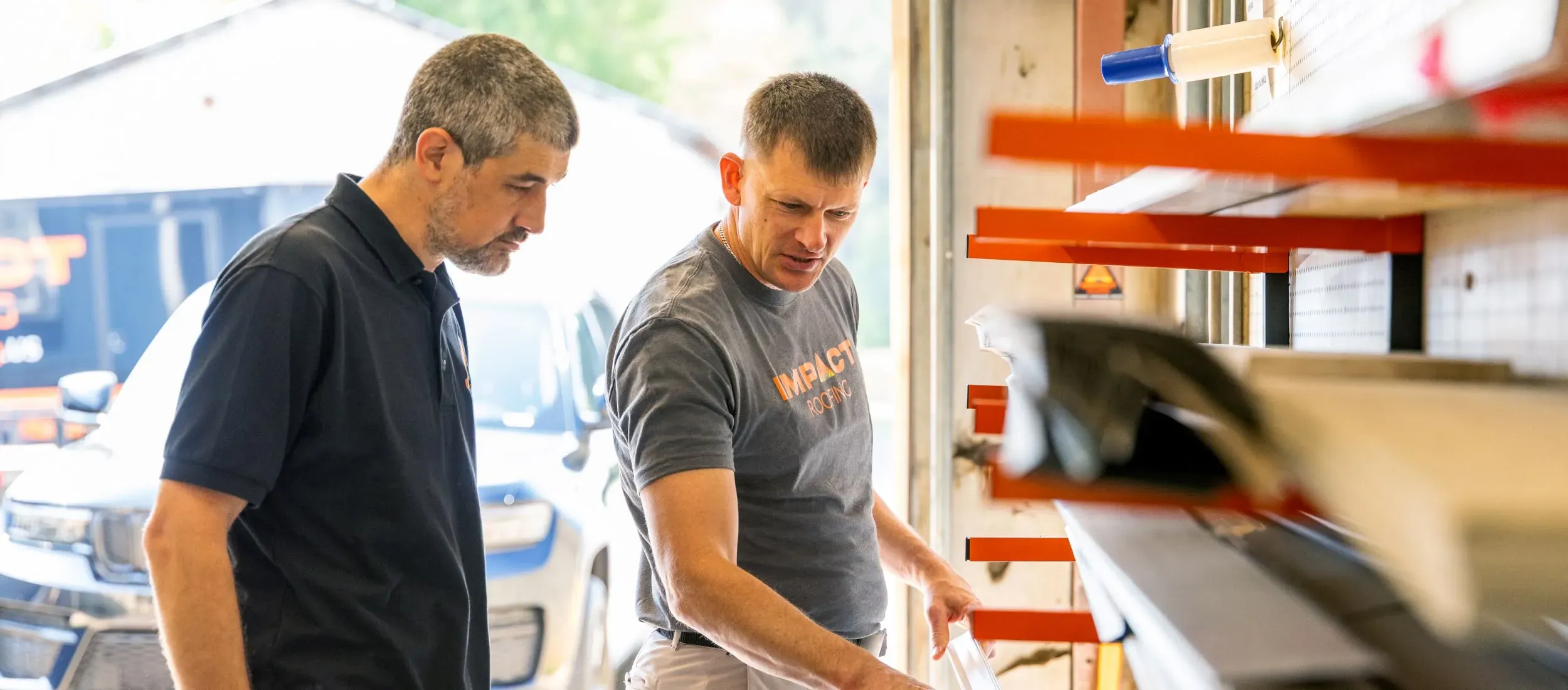
As a roofing sales manager, Jordan Lovell attended an industry retreat that emphasized values and culture, inspiring him to build a business where ethics came first. He founded IMPACT Roofing in 2021, with the core values of “integrity, knowledge, and service” guiding all business decisions and interactions, both with customers and among staff. The team builds trust through total transparency about estimates, repairs, and even what kind of noise and mess to expect. “Our goal is to be a reliable partner for people facing stressful repairs,” says Jordan. In 2025, IMPACT completed almost 600 jobs and expanded to a second office.

“Nano Banana helps edit marketing photos and create unique assets and diagrams for our sales presentation book.”
Systems Director London Posey uses Gemini to troubleshoot issues, instead of spending hours researching solutions. When their phone system’s admin portal recently changed, he simply uploaded a screenshot and asked Gemini where certain settings went and how to do what he needed. “The time savings is immeasurable,” he says. He also uses Gemini in Google Sheets, where it recently built complex formulas to help him automate a sales bonus tracker. Nano Banana helps edit photos, turning brown grass green or removing background clutter. He also used the tool to turn a common industry diagram, which existed only as a grainy image, into a high-resolution graphic for their presentation book. London notes that Google Local Services Ads are IMPACT’s number one lead source for customers. Meanwhile, their Google Business Profile has 700+ five-star reviews, and drives 20 percent of all booked inspections. The team incorporates these reviews into homeowner presentations, letting satisfied customers speak for them. IMPACT lives up to their name by donating to local sports, band, and STEM programs, and sponsoring the Athens Home Show. “We’re passionate about the impact we have in our community, and roofing is the vehicle we use to achieve that impact,” says Jordan.
Aunt Henri
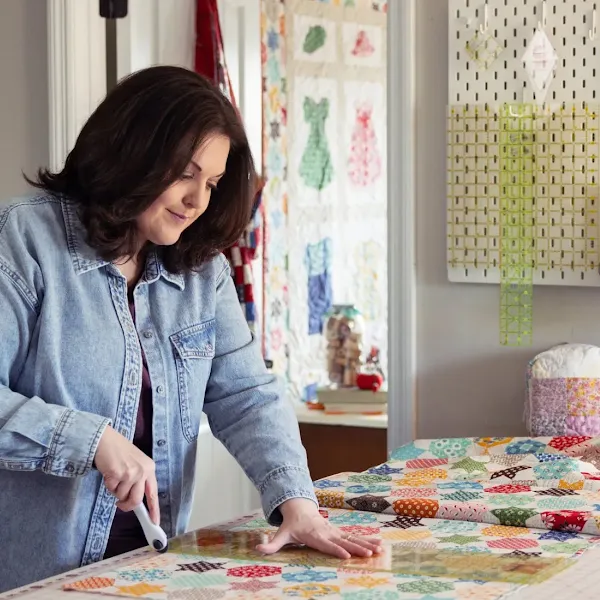
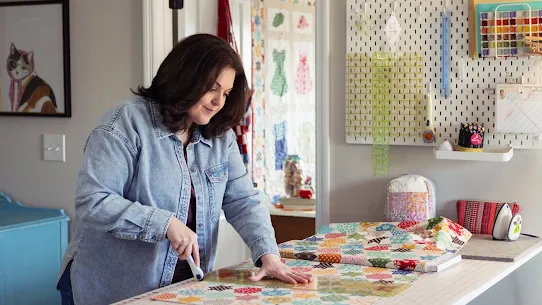
Jesse Monaco launched Aunt Henri, her vintage-style children’s dresses business, with her mother, Victoria Passmore, in 2013. Textiles run in the family, with a legacy of tailors and seamstresses–including a great-aunt named Henri. Jesse learned to sew as an adult, and that’s when she and Victoria began making and selling their dresses in local boutiques. In 2016, they went online and launched an Artsy Collection that sold out within minutes. “People really responded, and we just started to grow,” Jesse recalls. Aunt Henri has two shops in an online marketplace: One for handmade quilts, accessories, and decor, and one for craft supplies, fabric bundles, and popular slow-stitch kits. Their website offers tutorials, patterns, and a blog. They’ve used Google Workspace from the start, storing thousands of product photos in Drive. “It’s so easy, because I have all of my content creation in one place,” says Jesse.
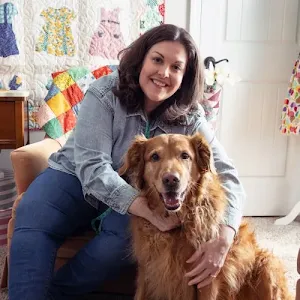
“[Gemini is] my little personal assistant–it saves time and provides new ideas.”
With logistics and marketing disrupting her creative time, Jesse took Google AI Essentials to see if AI could help. “A light bulb went off and I realized I could use it for more than creating content–I could use it to create strategies and help with marketing,” she explains. Now she enlists Gemini for product optimization, to brainstorm marketing and content ideas, and to research trending themes and colors so Aunt Henri can offer what crafters want. “It’s my little personal assistant–it saves time and provides new ideas,” Jesse notes. “I can even tell it to write scripts in a southern accent so it’s tailored to how I speak!” Since she’s been using AI, and more recently Google Ads, they’ve seen a 20 percent increase in traffic to their shops and 1,000 new followers. Next is The Creative Collective, an online gathering space. As Jesse says, “We’ll have our own little Aunt Henri community in one place, so we can just connect over the joy of crafting.”
GO-KOT
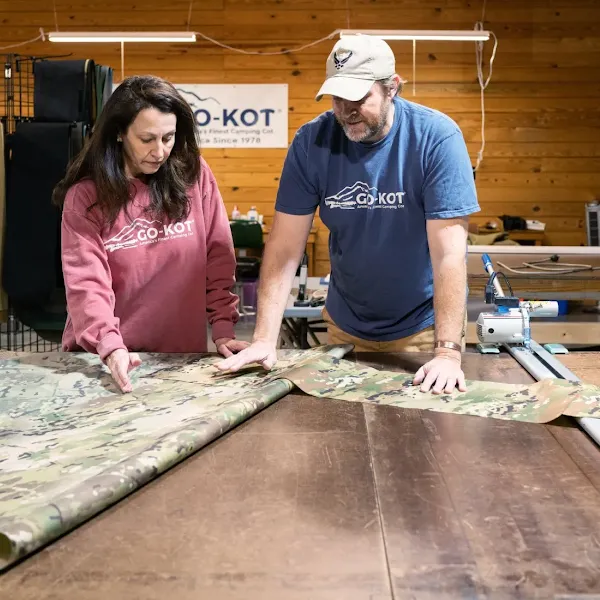
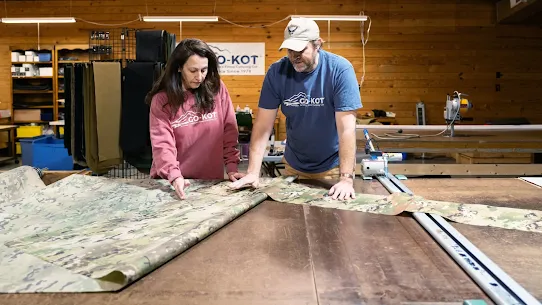
Married Air Force veterans Teresa and Mike Downing were looking for a business they could go into together, ideally an American-made product they believed in. So it was kismet when they got to know the founder of GO-KOT. Manufactured in their home state of Alabama since 1978, GO-KOT is the only low-profile camping cot made in America. The 81-year-old founder was ready to sell the company–but only to someone who would keep manufacturing in the U.S. Teresa and Mike jumped at the chance. “We worked with the founder for six months or so, learned the ropes and the craftsmanship, and took over in 2017,” Mike says. Today, GO-KOT sells their ethically sourced cots to the military, Forest Service, and direct to campers.
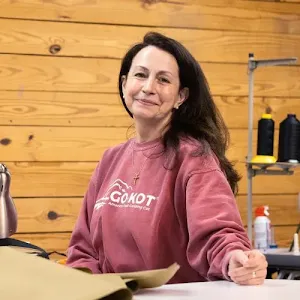
“We’ve done some social, some email, and so on, but Google consistently gives us the best return on investment.”
GO-KOT already had a cult following, but Teresa and Mike had to start marketing from scratch. “For 12 years there had been no advertising,” explains Teresa, president and owner. “The business lived by word of mouth.” They jumped into Google Ads Smart campaigns immediately, and though they tried other channels, Google Ads remained the one constant. “We’ve done some social, some email, and so on,” says Teresa, “but Google consistently gives us the best return on investment.” Mike adds, “We’re craftspeople, not tech people. Smart campaigns are the only way we can get through it.” Google Ads and Google Search together now account for roughly 20 percent of GO-KOT’s revenue. The Downings use Google Analytics to track performance and adjust their ads accordingly. They’ve also launched a YouTube channel where they post how-to and marketing videos. Today, the family-run business is still small with a team of four, but GO-KOT has doubled their revenue since 2018. This lets them donate to local nonprofits focused on homelessness, missionary work, and veterans’ services. “We partner with people that have missions close to our heart,” says Teresa. “That's community to us.”
Products

Kiva Dunes

After a successful career in national land development, Jim Edgemon returned to his first loves: golf, and his Alabama home. When he discovered an unspoiled 276-acre plot of land on the water outside beautiful Gulf Shores, he knew he’d found the perfect place to create Alabama’s premier golf and beach resort. Since opening in 1995, Kiva Dunes has grown to include 78 rental properties consisting of homes and condos, two restaurants and an award-winning championship golf course–all designed to preserve the peninsula’s natural beauty. “We were one of the first golf courses in America to put a conservation easement on our property,” Jim explains. “This land will never be developed into urban sprawl.”

“With the analytics in Google Ads, I’m able to zero in on exactly who our customers are and use that information to attract new customers year-round.”
To help them manage the operations of such a complex business, Jim’s maintenance, housekeeping, and hospitality teams trust Google Workspace. Tools like Gmail, Calendar, and Sheets keep employees seamlessly connected about daily schedules and welcome information for each property. “It lets us work so much faster without stopping to worry about errors. It puts everything at our fingertips, from maintenance to guest services,” says Marketing Director Katie Avant. And when Kiva Dunes wanted to make their year-round revenue more steady and reliable, Google Ads gave them the tools to attract more families, off-season golfers, and younger vacationers. “The feedback we get about exactly where our dollars are going and how much impact each one is having is incredible,” Jim says. “We hardly have an off-season anymore.” With rental revenue up 72 percent and 33 percent more golfers teeing off year-over-year, growth is just par for the course at Kiva Dunes. As Jim says, “It’s amazing what your business can do with the right clubs in the bag.”
Products
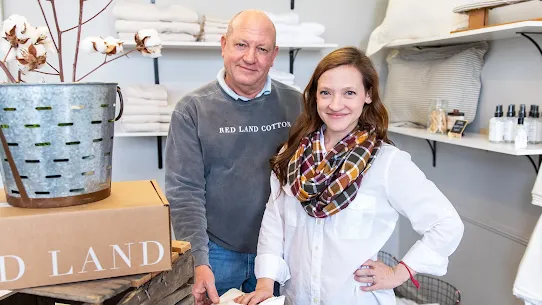
Red Land Cotton
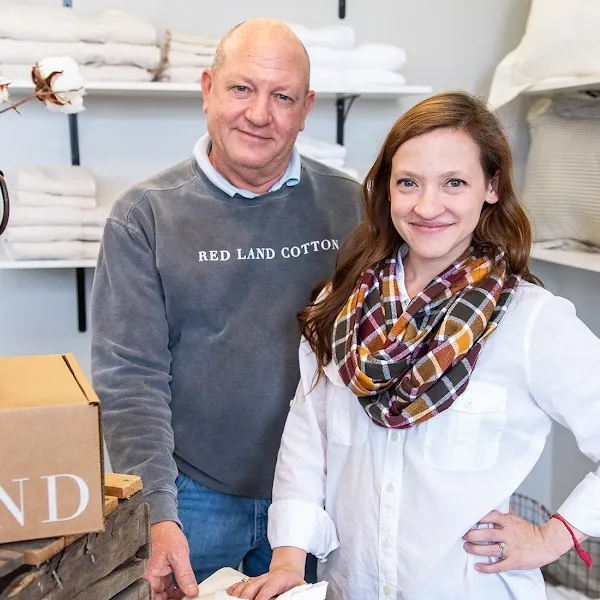
In 2015, Anna Brakefield was working as a graphic designer in Nashville, and wanted new professional challenges. Her father, Mark Yeager, ran a cotton farm in her hometown of Moulton, Alabama, and saw a growing disparity between the price he paid for raw cotton and what he paid for a cotton shirt. He decided to make direct-to-consumer products using his farm’s cotton and asked Anna to join him. Inspired by nostalgia for Mark’s grandmother’s beautiful linens, they launched their own heirloom cotton linens business in 2016. With a farm-to-home business model, an eye on sustainability, and adept use of digital tools like Google Ads and Google Analytics, Red Land Cotton saw 40-percent growth year-over-year. In 2019, they processed more than 15,000 orders and planned for new products, increased production, and new facilities. Then COVID-19 caused massive shutdowns, including Red Land Cotton’s storefront and factories. Rather than let the raw cotton sit unused, they made masks and donated thousands of yards of fabric to area hospitals.

“We always ask people how they found us, and it's almost always one of our Google Ads.”
Yet their online business continued to thrive. In fact, business increased, and demand nearly doubled in the spring of 2020, largely due to a 150-percent increase in Google traffic. Google Ads for Search and Gmail ads were key in that spike. “They allow us to be seen and align people with what they want to see,” Anna says. And thanks to Google Analytics, Anna noticed that their ads were reaching younger shoppers—knowledge that they’ll use to plan upcoming products. Now that production has restarted, Red Land Cotton has launched a new blanket that was planned pre-pandemic and hopes to release new robes before Christmas. They’ve also hired more staff and opened new fulfillment and cut-and-sew facilities. Anna is proud to be creating jobs and making an economic impact in her beloved hometown. “We’re able to hire lots of people because of people’s desire and willingness to pay for American-made goods,” she says.
Products

1To provide a more complete picture of Google’s economic investment, the 2025 U.S. Economic Impact Report has updated its historical investment reporting methodology which previously focused primarily on physical data center construction. However, physical builds represent only the first component of our long-term commitment to our investments which also include applicable server and networking infrastructure capital expenditure. The current year methodology now includes our historical investment in data center construction, server and networking infrastructure.